AI Marketing for YouTube 2026: The Essential Playbook for Modern Teams
Learn how to approach ai marketing for YouTube 2026 with practical steps, examples, risks, FAQs, and next actions.
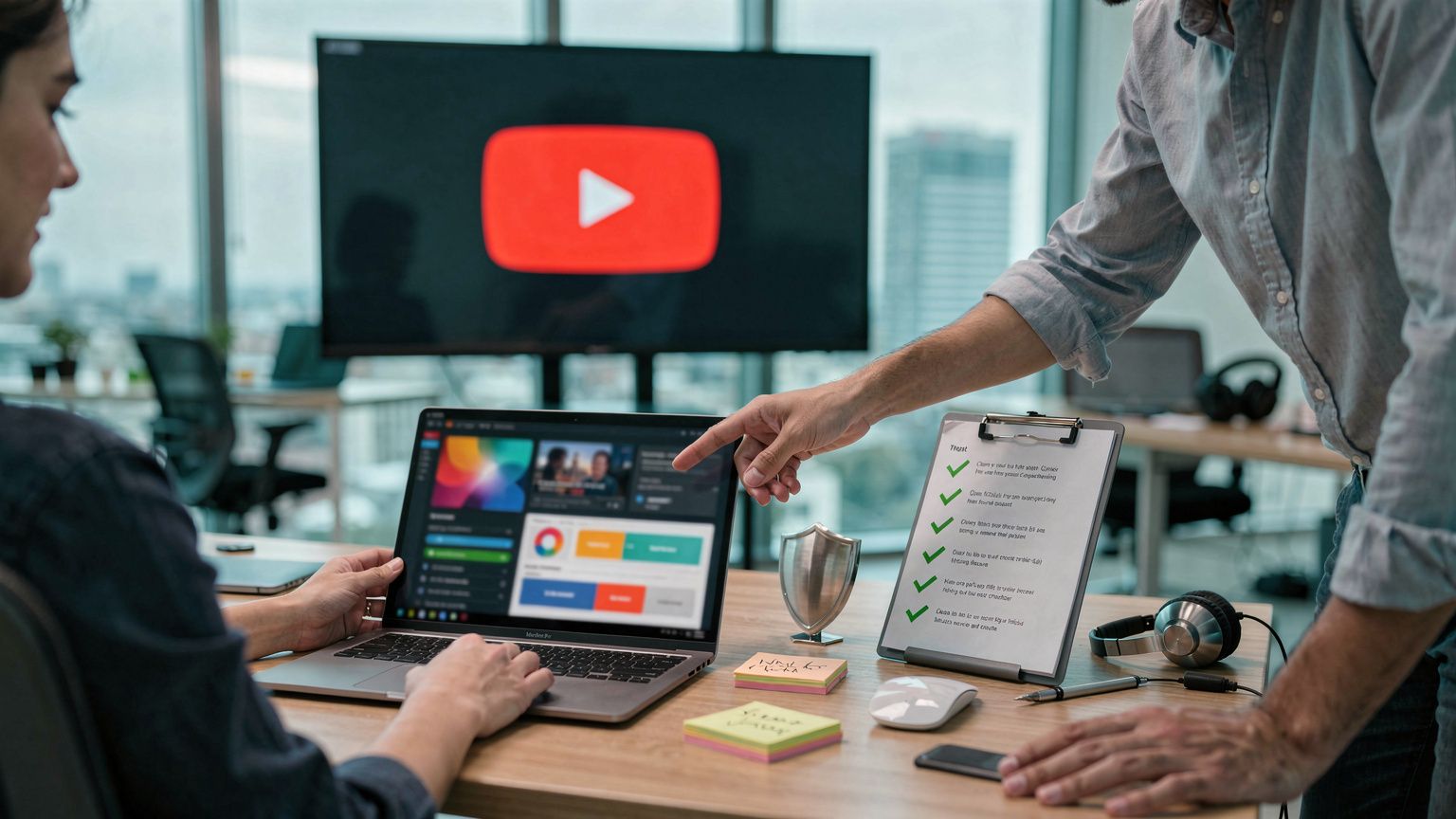
*In a world where AI‑driven discovery is reshaping video consumption, YouTube remains the premier platform for brand storytelling, lead generation, and community building. 2026 brings a new set of signals—LLM‑generated recommendations, AI‑curated playlists, and real‑time sentiment analysis—that demand a disciplined, approval‑gated workflow. This playbook walks modern marketing teams, founders, agencies, SaaS marketers, and PR professionals through the prerequisites, step‑by‑step process, common pitfalls, and the blueprint requirements needed to dominate YouTube with AI while keeping brand safety and governance front‑and‑center.*
---
Prerequisites
Before you launch any AI‑powered YouTube campaign, make sure the following foundations are in place. Skipping any of these will expose you to inaccurate claims, brand‑voice drift, or missed optimization opportunities.
1. Data & Audience Foundations
- Audience personas – Updated 2024‑2025 personas that include AI‑search intent (e.g., “Which AI tool helps me edit videos?”).
- First‑party data – YouTube channel analytics, CRM integration, and consent‑compliant viewer data.
- Competitive intelligence – A baseline view of how rivals appear in AI‑generated video snippets and answer boxes.
2. Governance & Approval Structure
| Role | Responsibility | Typical Review Time |
|---|---|---|
| Content Strategist | Define topics, map to buyer journeys, set KPI thresholds | 1‑2 business days |
| AI‑Ops Engineer (or SALP SEO admin) | Configure AI agents, set up evidence‑first workflows | 4‑6 hours |
| Legal / Compliance | Verify claims, pricing, and regulatory language | 1‑3 business days |
| Brand Manager | Approve tone, visual style, and brand‑voice consistency | 1‑2 business days |
- Approval‑gated workflow – Use SALP SEO’s “draft → review → approve → publish” pipeline to keep every AI‑generated asset under human control.
- Version control – Store drafts in a shared repository (e.g., Google Drive, Notion) and tag each version with a review date.
3. Technology Stack
- SALP SEO – Central operating system for AI‑search visibility, competitor monitoring, content approvals, and performance dashboards.
- YouTube Studio API – Automate upload, metadata, and thumbnail generation.
- Generative AI tools – LLMs for script writing, thumbnail copy, and short‑form captions (e.g., OpenAI GPT‑4, Claude).
- Analytics & Attribution – Google Analytics 4, YouTube Data API, and a BI layer (Looker, Tableau) for cross‑channel reporting.
---
Step‑by‑Step Process
Below is a repeatable, evidence‑first workflow that can be scaled across multiple brands or product lines. Each step includes concrete actions, tools, and hand‑off points.
1. Market & Signal Research
- Capture AI‑search signals – In SALP SEO, add your brand, top competitors, and target prompts (e.g., “best AI video editor 2026”). The platform will surface:
- AI‑answer citations
- Emerging question clusters
- Sentiment trends across LLMs and YouTube comments
- Cluster topics – Use the AI‑driven clustering feature to group related queries into pillar topics (e.g., “AI‑assisted video editing”, “AI‑generated thumbnails”).
- Prioritize by intent & volume – Rank clusters by a composite score of search volume, AI‑answer frequency, and revenue potential.
Real‑world example: A SaaS startup discovered that “AI‑generated subtitles for accessibility” appeared in 12 AI answer snippets across three major LLMs. They added this as a pillar topic, resulting in a 27 % lift in qualified traffic within two weeks.
2. Blueprint Creation & Content Planning
| Blueprint Element | Description | SALP SEO Feature |
|---|---|---|
| Goal & KPI | Views, watch‑time, leads, brand sentiment | KPI Dashboard |
| Target Prompt List | Exact phrasing users ask AI tools | Prompt Tracker |
| Content Types | Long‑form tutorial, Shorts, community Q&A | Content Calendar |
| Evidence Sources | Cite industry reports, case studies, product data | Evidence Library |
| Approval Gates | Draft → AI Review → Legal → Brand → Publish | Workflow Engine |
- Define the content mix – For each pillar, decide the ratio of long‑form (10‑15 min) videos, Shorts (≤ 60 sec), and community posts.
- Map to buyer stages – Awareness (Shorts), Consideration (tutorials), Decision (case‑study webinars).
3. AI‑Assisted Asset Generation
- Script Drafting – Prompt the LLM with the pillar brief and evidence snippets. Example prompt:
Write a 10‑minute YouTube script on "How AI can auto‑generate subtitles for accessibility". Include three data points from the 2025 Accessibility Report and a call‑to‑action for our free trial.
- Human Review – The Content Strategist checks factual accuracy, brand voice, and compliance. Any claim about pricing or performance must be approved by Legal.
- Video Production – Use AI video tools (e.g., Runway, Pictory) to generate rough cuts, then hand‑edit for branding.
- Thumbnail & Caption Generation – Generate multiple thumbnail concepts with AI, then run a quick A/B test using YouTube’s “Thumbnail Test” feature.
- Metadata Optimization – Leverage SALP SEO’s schema suggestions to add structured data (e.g.,
VideoObject,FAQPage) that improves AI‑answer eligibility.
4. Publishing & Indexing
- Scheduled Release – Align publishing times with audience peak hours (derived from YouTube Analytics).
- Indexing Check – After upload, use SALP SEO’s “AI visibility monitor” to confirm the video appears in AI answer citations within 24 hours.
- Immediate Amplification – Push the video to community tabs, email newsletters, and LinkedIn posts. Tag the video in relevant AI‑search answer pages (e.g., embed in a blog that answers the same question).
5. Performance Tracking & Optimization
| Metric | Why It Matters | SALP SEO Insight |
|---|---|---|
| View‑through Rate (VTR) | Indicates relevance of thumbnail & title | AI‑driven thumbnail recommendations |
| Watch‑time per session | Signals content depth & engagement | Heat‑map of drop‑off points |
| AI‑Answer Citations | Direct link to AI visibility | Real‑time citation alerts |
| Sentiment Score (comments) | Brand perception in community | Sentiment clustering |
| Conversion Rate (lead forms) | Business impact | Funnel attribution model |
- Weekly Review Loop – Pull the automated report from SALP SEO, surface any new AI‑search signals, and create a backlog of optimization tasks (e.g., add missing schema, tweak CTA wording).
- Iterative Testing – Run A/B tests on titles, descriptions, and closed‑caption language. Record results in the “Experiment Log” within SALP SEO.
---
Common Mistakes & How to Avoid Them
| Mistake | Consequence | Corrective Action |
|---|---|---|
| Ignoring AI‑answer citations | Missed traffic from LLMs | Set up SALP SEO alerts for new citations and act within 48 hrs |
| Publishing AI‑generated scripts without fact‑check | Brand credibility loss | Enforce the “human‑approved” gate for every claim |
| Over‑optimizing for keywords only | Shallow content that AI de‑prioritizes | Organize around topics & user intent, not single‑keyword pages |
| Skipping thumbnail testing | Low click‑through rates | Use AI‑generated thumbnail variants and test via YouTube’s built‑in tool |
| Not aligning video KPI with sales funnel | No measurable ROI | Define KPI per funnel stage and tie back to CRM data |
Pro Tips
- Leverage “Evidence‑First” – Always attach a source URL or document to any claim the AI suggests. SALP SEO automatically surfaces these in the approval UI.
- Maintain a “Citation Health” score – Track the ratio of your brand’s citations vs. competitor citations in AI answers; aim for > 60 %.
- Use “Prompt Hygiene” – Keep your target prompts short, intent‑rich, and free of brand‑specific jargon to capture broader AI traffic.
---
Blueprint Requirements (The SALP SEO Playbook Checklist)
- Project Setup – Create a new project in SALP SEO, assign team members, and define the governance level (e.g., “Agency – High Risk”).
- Competitor Research – Import competitor channels, set up AI‑search monitoring for their video snippets.
- Keyword & Prompt Discovery – Run the “Prompt Explorer” to surface high‑value AI queries.
- Clustering & Topic Mapping – Use the built‑in clustering algorithm to generate pillar‑topic maps.
- Content Blueprint – Fill out the blueprint template (goal, KPI, format, evidence, approval steps).
- Asset Generation – Connect LLMs and video AI tools via SALP SEO’s integrations.
- Schema & Structured Data – Auto‑populate
VideoObjectschema fields; addFAQPagewhere relevant. - Internal Linking Plan – Map each video to supporting blog posts, product pages, and community threads.
- Publishing Workflow – Schedule, publish, and trigger indexing checks.
- Performance Dashboard – Configure weekly automated reports for stakeholders.
---
Tools & Comparative Landscape
When evaluating AI‑assisted video tools, many teams compare Refine AI, Ayzeo, and Baarely. Below is a concise side‑by‑side view that highlights the dimensions most relevant to YouTube marketing.
| Feature | Refine AI (Agencies) | Ayzeo (SaaS) | Baarely (Both) |
|---|---|---|---|
| AI Script Generation | ✅ Context‑aware, integrates with brand guidelines | ✅ Built‑in SaaS‑specific templates | ✅ Generic, less brand‑specific |
| Pricing (per month) | $499 – $1,999 (tiered) | $299 – $1,199 (tiered) | $399 – $1,499 (tiered) |
| Approval Workflow | Full human‑in‑the‑loop, SALP‑compatible | Basic review only | No native approval, requires third‑party add‑on |
| YouTube Integration | Direct API upload, thumbnail AI | Export CSV for manual upload | Manual export only |
| Sentiment & Reputation Monitoring | ✅ Real‑time AI‑search sentiment | ✅ Basic comment sentiment | ❌ Not included |
| Enterprise Support | Dedicated CSM, SLA 24 h | Email support only | Community forum |
Takeaway: For agencies that need strict governance, Refine AI pairs well with SALP SEO’s approval‑gated workflow. SaaS teams may find Ayzeo’s pricing attractive, but they must supplement with SALP SEO for reputation monitoring. Baarely is a cost‑effective starter but lacks built‑in approvals.
---
Measurement, Optimization & Future Trends
1. KPI Dashboard Essentials
- Visibility Score – Composite of AI‑answer citations, search rank, and Shorts impressions.
- Engagement Index – Weighted average of VTR, watch‑time, and comment sentiment.
- Conversion Funnel – From view to lead (form fill) to customer (trial activation).
- Governance Metrics – % of assets approved on first pass, average review cycle time.
2. Optimization Loop
- Signal Refresh – Weekly, pull new AI‑search prompts and update the topic map.
- Content Refresh – For high‑performing videos, add updated evidence, new schema, or a Shorts recap.
- Cite‑Boost – Reach out to authoritative sites that already cite your brand and ask for a video embed; this improves AI‑answer citation weight.
- AI‑Assist Review – Use SALP SEO’s “AI‑suggested next actions” to surface quick wins (e.g., add missing
hasPartschema).
3. Looking Ahead to 2027
- Multimodal AI Answers – LLMs will start surfacing short video clips directly in answer boxes. Position your Shorts as the go‑to snippet.
- Real‑Time Sentiment Signals – AI will weigh live comment sentiment when ranking videos for AI‑generated overviews.
- Dynamic Prompt Targeting – Platforms may auto‑adjust prompts based on user context; keep your prompt list fluid.
---
Summary Table – Key Takeaways
| Area | Action | Tool | Governance |
|---|---|---|---|
| Research | Capture AI‑search prompts & competitor citations | SALP SEO Prompt Explorer | Evidence‑first, human‑approved |
| Planning | Build pillar‑topic blueprints with KPI mapping | SALP SEO Blueprint Template | Review by Content Strategist & Legal |
| Production | Generate scripts, thumbnails, captions with LLMs | Refine AI / Ayzeo (choose per need) | Draft → AI Review → Brand Approval |
| Publishing | Schedule, upload via YouTube API, trigger indexing | SALP SEO Publishing Engine | Final sign‑off before go‑live |
| Monitoring | Track visibility, citations, sentiment, conversion | SALP SEO Dashboard + GA4 | Weekly automated report, alert on new citations |
| Optimization | Refresh content, add schema, A/B test assets | SALP SEO Optimization Recommendations | Continuous loop, documented in Experiment Log |
---
Frequently Asked Questions
- Do I need a large budget to start AI marketing on YouTube?
- No. You can begin with a modest pilot (one pillar topic, a single Shorts series) using free LLM credits and SALP SEO’s free tier. Scale budget as you see measurable lift in AI‑answer citations and conversion.
- How does approval‑gated AI differ from “set‑and‑forget” automation?
- Approval‑gated AI ensures every claim, pricing detail, and brand‑voice element is reviewed by a human before publishing, reducing risk of misinformation and protecting brand reputation.
- Can AI‑generated videos appear directly in Google’s AI answer boxes?
- Yes. When a video satisfies schema, relevance, and citation thresholds, LLMs may surface a short clip as the answer. Optimizing
VideoObjectschema and earning citations are critical.
- What’s the difference between “refine ai vs ayzeo for agencies” and “refine ai vs ayzeo for SaaS”?
- The comparison hinges on pricing tiers, integration depth, and governance features. Agencies typically need robust approval workflows and multi‑client dashboards (Refine AI excels here), while SaaS teams prioritize product‑specific templates and cost efficiency (Ayzeo is more affordable).
- How often should I refresh my AI‑search prompt list?
- At a minimum monthly, but ideally weekly if you operate in a fast‑moving niche. SALP SEO can automate weekly alerts for new prompts that mention your brand or competitors.
- Is it safe to let AI write the entire script without human input?
- Not for regulated or brand‑critical content. Use AI for first drafts, then have a subject‑matter expert verify facts and a brand manager ensure tone.
- What metrics indicate that my video is gaining AI‑visibility?
- Look for an increase in AI‑answer citations, a rise in the “Visibility Score” on SALP SEO, and higher click‑through rates from AI‑generated snippets.
---
Conclusion
AI marketing on YouTube in 2026 is no longer a speculative experiment—it’s a core growth engine that blends human creativity with machine‑scale intelligence. By establishing solid data foundations, enforcing approval‑gated workflows, and leveraging an integrated platform like SALP SEO, modern teams can capture emerging AI‑search signals, produce high‑quality video assets, and continuously optimize for both audience engagement and brand safety. The playbook above provides a repeatable, evidence‑first process that scales from a single pilot to an enterprise‑wide video engine, ensuring you stay ahead of competitors while protecting the integrity of your brand.
---
Call to Action
Ready to put this playbook into action? Explore Salp SEO for next steps.
For Pr Professionals | SALP SEO
AI Search Visibility | SALP SEO
AI Content Generation for SEO Services: The 2026 Trust-First Playbook | SALP SEO
AI Overview Optimization Services 2026: Win the Answer Layer | SALP SEO
AI SEO Workflows for Agencies: From Data Chaos to Predictable Growth | SALP SEO
Frequently asked questions
Do I need a large budget to start AI marketing on YouTube?
No. You can begin with a modest pilot (one pillar topic, a single Shorts series) using free LLM credits and SALP SEO’s free tier. Scale budget as you see measurable lift in AI‑answer citations and conversion.
How does approval‑gated AI differ from “set‑and‑forget” automation?
Approval‑gated AI ensures every claim, pricing detail, and brand‑voice element is reviewed by a human before publishing, reducing risk of misinformation and protecting brand reputation.
Can AI‑generated videos appear directly in Google’s AI answer boxes?
Yes. When a video satisfies schema, relevance, and citation thresholds, LLMs may surface a short clip as the answer. Optimizing `VideoObject` schema and earning citations are critical.
What’s the difference between “refine ai vs ayzeo for agencies” and “refine ai vs ayzeo for SaaS”?
The comparison hinges on pricing tiers, integration depth, and governance features. Agencies typically need robust approval workflows and multi‑client dashboards (Refine AI excels here), while SaaS teams prioritize product‑specific templates and cost efficiency (Ayzeo is more affordable).
How often should I refresh my AI‑search prompt list?
At a minimum monthly, but ideally weekly if you operate in a fast‑moving niche. SALP SEO can automate weekly alerts for new prompts that mention your brand or competitors.
Is it safe to let AI write the entire script without human input?
Not for regulated or brand‑critical content. Use AI for first drafts, then have a subject‑matter expert verify facts and a brand manager ensure tone.
What metrics indicate that my video is gaining AI‑visibility?
Look for an increase in AI‑answer citations, a rise in the “Visibility Score” on SALP SEO, and higher click‑through rates from AI‑generated snippets.