AI Search in 2026: ChatGPT vs Google vs Perplexity showdown
Learn how to approach ai search trends 2026 comparison with practical steps, examples, risks, FAQs, and next actions.
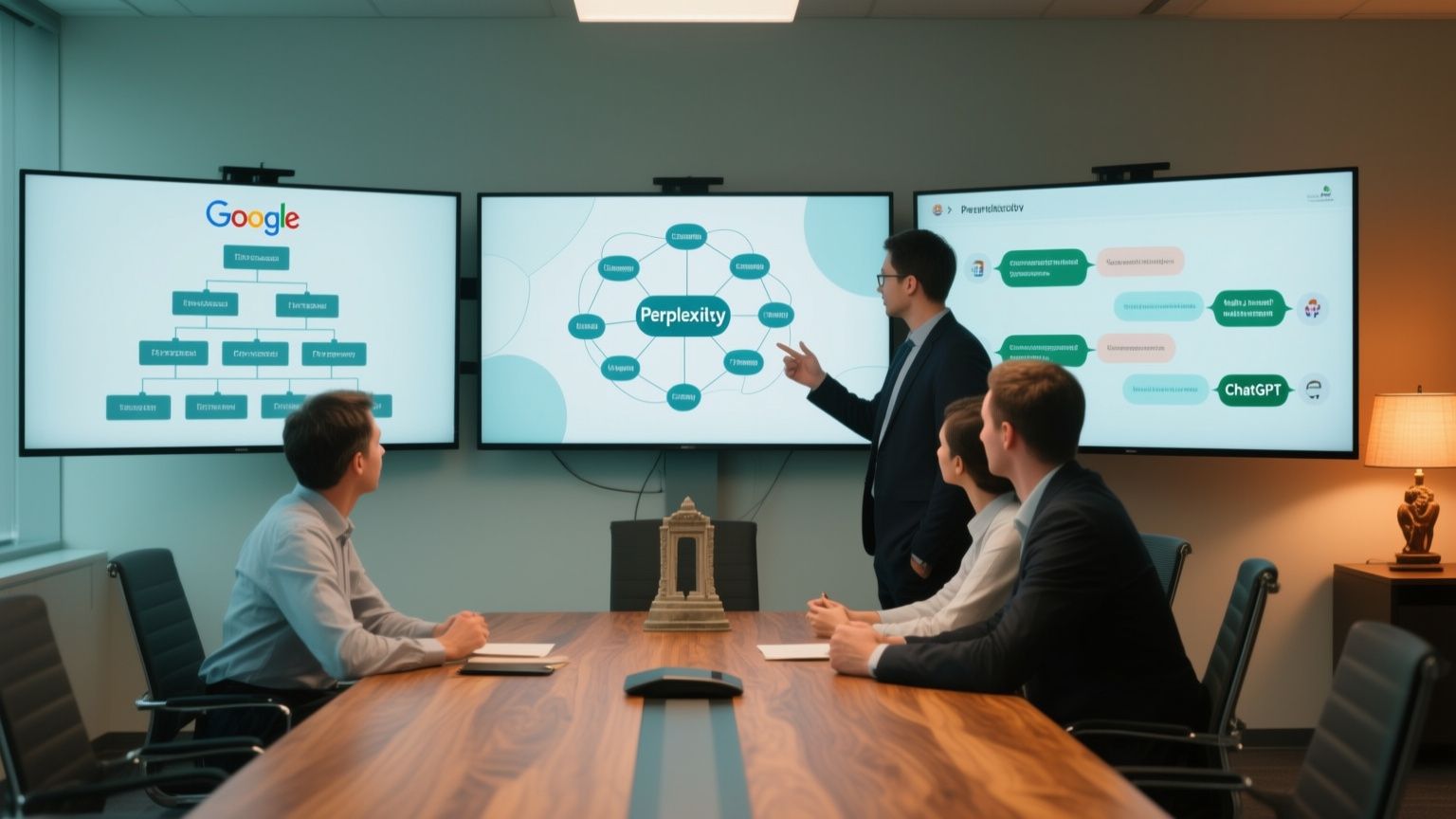
Discovery in 2026 looks fundamentally different from the search engine landscape of a few years ago. Modern buyers no longer type isolated keyword fragments into a single search box and manually comb through ten blue links. Instead, they turn to conversational engines, interactive chat interfaces, and deeply integrated AI assistants like ChatGPT, Google (with its AI Overviews), and Perplexity. Each of these platforms approaches information retrieval with distinct architectures, ranking heuristics, and user experiences.
For marketing teams, founders, agencies, SaaS companies, and PR professionals, this shift represents both a massive opportunity and a governance challenge. If your brand is not visible in the synthesized answers provided by these generative platforms, you are effectively invisible to a fast-growing segment of high-intent buyers. However, chasing AI visibility without a structured, evidence-first operating system invites chaos, inaccurate claims, and brand erosion. This article breaks down the 2026 AI search landscape, compares the major players, and offers an actionable blueprint for governed, approval-safe growth.
---
How to ai search trends 2026 comparison
Comparing AI search trends in 2026 requires looking past surface-level rankings and examining how information flows through generative models. Traditional search engine optimization (SEO) relied on keyword density, backlink volume, and structural tags. While technical foundations still matter, AI search engines evaluate entities, contextual relevance, multi-source consensus, and brand sentiment across the broader web.
To understand how ChatGPT, Google, and Perplexity process your brand, consider the core mechanics of each platform:
- Google AI Overviews: Blends classic algorithmic indexing with real-time generative summaries. It favors sites with established authority, clean structured data, and clear factual hierarchies that can be quickly parsed to answer direct questions.
- Perplexity: Acts as an answer engine built on real-time web grounding. It actively crawls and synthesizes multiple live sources, placing heavy emphasis on recent news, robust forum discussions, and transparent inline citations.
- ChatGPT: Relies on a sophisticated mix of parametric memory (pre-training data) and live tool-use search integrations. It excels at multi-turn reasoning, comparative analysis, and synthesizing brand narratives over extended conversations.
Evaluating these platforms side-by-side helps marketing teams allocate resources effectively. Below is a comparative breakdown of their core characteristics and strategic implications for 2026:
| Platform | Primary Retrieval Style | Key Trust Signals | Strategic Focus for Brands |
|---|---|---|---|
| Hybrid Algorithmic + Generative | Structured data, domain authority, speed | Technical excellence, entity clarity, structured content | |
| Perplexity | Real-Time Web Grounding | Live citations, multi-source consensus, freshness | PR monitoring, recent news coverage, forum presence |
| ChatGPT | Conversational Synthesis + Tool Search | Brand sentiment, deep web mentions, entity prominence | Comprehensive thought leadership, user sentiment, category definition |
Successfully navigating this triad means abandoning shallow, single-page keyword farming. Instead, teams must build cohesive content ecosystems that address user intent across the entire decision journey.
---
Prerequisites
Before launching an AI search optimization campaign or restructuring your content workflow to target ChatGPT, Google, and Perplexity, you must establish a solid operational foundation. Jumping into AI content generation without clear guardrails leads to factual errors, inconsistent brand voice, and wasted effort.
1. Unified Intelligence and Monitoring Stack
You cannot optimize for environments you cannot see. Modern teams need centralized visibility into how their brand appears across traditional search results, AI answers, news citations, and social discussions. Relying on disconnected tools for keyword tracking, reputation management, and content publishing creates blind spots. An evidence-first operating system is required to bring these signals together.
2. Approval-Gated Workflows
Automation is essential for scaling research, clustering topics, and drafting briefs. However, sensitive actions—such as publishing product claims, technical specifications, and pricing details—must never be fully autonomous. Establish explicit human-in-the-loop review gates. Define who must review an asset, set service-level agreements (SLAs) for reviews, and ensure that every claim is anchored in verified product evidence.
3. Topic and Entity Frameworks
Shift your planning from isolated keyword targets to interconnected topic hubs. Map out how your product solves specific buyer problems, integrates with other tools, and compares against market alternatives. Build mandatory metadata fields into your briefs, including target audience definitions, evaluation criteria, and source evidence dates.
---
Step-by-step process
Implementing a disciplined, scalable AI search strategy requires an end-to-end process that bridges research, drafting, review, and ongoing monitoring. Here is a practical, step-by-step framework adapted for modern marketing, SaaS, and PR teams.
Step 1: Comprehensive Discovery and Market Research
Begin by analyzing what your target audience is asking across Google, AI chat interfaces, and industry forums.
- Gather recurring buyer questions, feature comparisons, and alternative searches.
- Use your AI search intelligence platform to uncover content gaps where competitors are winning citations but your brand is absent.
- Build a seed keyword list organized around buyer intent and decision stages rather than raw search volume.
Step 2: Pilot Cluster Execution
Rather than attempting to overhaul your entire web presence overnight, start with a controlled pilot cluster.
- Select 3 high-intent pillar pages and 5 supporting posts focused on a core SaaS or agency topic.
- Define strict approval rules (e.g., two team members must review pillar assets for factual accuracy and tone).
- Set clear publishing SLAs and technical verification checks (such as validating canonical tags and structured data schemas).
Step 3: AI-Assisted Drafting with Evidence Anchoring
Leverage automation to accelerate the creation phase without sacrificing quality.
- Use AI to summarize competitor positioning, draft outlines, and synthesize audience signals.
- Ensure every generated draft includes direct references to product evidence, customer case studies, and verifiable limitations.
- Feed approved research directly into your content production pipeline.
Step 4: Multi-Channel Distribution and Syndication
Publishing an article on your primary company blog is only the first milestone. Buyers discover ideas across newsletters, community platforms, partner sites, and social channels.
- Syndicate your core insights responsibly using controlled canonical tags.
- Monitor how your brand mentions propagate across external citation sources that feed Perplexity and ChatGPT search integrations.
Step 5: Continuous Visibility Monitoring and Iteration
AI search results fluctuate based on query context, location, and model updates.
- Monitor your brand's appearance in AI Overviews and chat citations on a weekly basis.
- Track sentiment shifts and competitor narrative movements to react before unfavorable stories spread.
- Revisit published assets whenever market monitoring identifies material product updates or shifting search intent.
---
Common mistakes
Even experienced marketing and SEO professionals stumble when adapting to the 2026 search ecosystem. Avoiding these frequent missteps will save your team time, budget, and credibility.
1. Chasing Guaranteed AI Overviews Placements
Many teams look for silver bullets or software that promises guaranteed top placement in AI Overviews or ChatGPT answers. Because generative responses vary dynamically by user context, location, and query nuance, absolute guarantees are impossible. A responsible strategy focuses on improving overall information quality, factual clarity, and entity authority rather than chasing transient algorithmic tricks.
2. Over-Automating Without Human Review
Fully autonomous publishing pipelines can scale content volume rapidly, but they inevitably introduce hallucinations, outdated pricing claims, and generic brand voices. Bypassing human approval gates for sensitive product claims damages brand trust and can invite regulatory scrutiny.
3. Treating AI Search as Just Another Keyword Channel
Treating ChatGPT and Perplexity like old-school search engines leads to keyword stuffing and shallow pages. Generative engines synthesize intent and evaluate depth. If your content lacks genuine insight, unique product evidence, and comprehensive comparison criteria, AI models will bypass your brand in favor of more authoritative sources.
4. Operating in Silos
Keeping SEO, PR, content marketing, and product positioning in disconnected dashboards creates massive blind spots. In 2026, reputation management and search visibility are deeply intertwined. PR teams need to see what search queries are driving AI discussions, and SEO teams need to understand real-time sentiment shifts.
---
Conclusion
The 2026 showdown between ChatGPT, Google, and Perplexity marks the maturation of conversational discovery. Success in this new era requires moving beyond outdated keyword tactics and embracing a governed, evidence-first approach to search intelligence. By combining the speed of AI-driven research with rigorous human approval workflows, marketing, SaaS, and PR teams can scale their visibility without sacrificing accuracy or brand integrity.
Whether you are building question hubs to capture AI Overviews, monitoring real-time sentiment shifts across millions of sources, or syndicating thought leadership across channels, having a unified operating system changes everything.
Ready to take control of your brand's presence across every generative engine that matters? Explore Salp SEO for next steps.
Practical SaaS Implementation and Tooling Workflows
Executing an AI search strategy in 2026 requires more than a high-level content calendar; it demands a connected software stack that can handle automated discovery, rigorous review gates, and rapid deployment. Modern SaaS organizations, marketing agencies, and enterprise PR teams often weigh various platforms to manage this operational shift.
When evaluating your tooling stack, compare integrated solutions against legacy point products. For instance, teams frequently analyze streamlined platforms such as Salp SEO alongside specialized workflow assistants like Refine AI, Ayzeo, or Baarely. While tools like Refine AI, Ayzeo, and Baarely offer modular drafting assistance, enterprise operations often require a more comprehensive, approval-gated operating system that unifies competitor research, keyword clustering, structured schema deployment, and automated indexing checks under a single roof.
Core SaaS Stack Components
To build an efficient AI search operation, configure your technology stack around these foundational layers:
- Discovery and Competitive Intelligence Engine: Continuously scrapes and parses what ChatGPT, Google AI Overviews, and Perplexity return for your core brand terms, product categories, and competitor queries.
- AI-Driven Clustering and Blueprint Generator: Aggregates unstructured search data into cohesive topic clusters, establishing intent hierarchies, supporting keywords, and mandatory content outlines.
- Approval-Gated Production Pipeline: Generates initial drafts, outlines, meta descriptions, and image prompts while enforcing strict human review checkpoints before any asset touches your CMS.
- Technical Schema and Indexing Verifier: Automatically applies proper JSON-LD article, FAQ, and product schema, while tracking live indexing status across search engines and AI citation databases.
---
Decision Criteria: Selecting Your AI SEO and Search Strategy
Choosing the right approach and software platform for AI search optimization requires evaluating your organization's internal capacity, compliance requirements, and growth goals. Use the following decision matrix to guide your software selection and workflow design:
- Regulatory and Compliance Rigor: If your SaaS product operates in fintech, healthcare, enterprise security, or complex B2B verticals, you cannot tolerate generative hallucinations. Prioritize tools that enforce strict source attribution and mandatory multi-tier human review.
- Team Scale and Resource Constraints: Lean marketing teams and early-stage founders benefit from automated clustering and pre-built blueprints that minimize manual research time. Larger agency teams require robust role-based access control (RBAC), client approval portals, and multi-project dashboards.
- Integration Flexibility: Ensure your AI search platform integrates seamlessly with your existing publishing infrastructure—whether that is WordPress, Webflow, headless CMS architectures, or custom internal publishing APIs.
- Total Cost of Ownership: Compare pricing models across alternative solutions like Refine AI vs Ayzeo for agencies or Refine AI vs Baarely for SaaS. Look beyond initial subscription fees to factor in the time saved on manual content auditing, schema markup, and internal linking maintenance.
---
Measuring Success in AI Search
Traditional SEO metrics like raw organic traffic and keyword rankings no longer tell the full story. In a conversational discovery ecosystem, success is measured by visibility breadth, brand sentiment, citation frequency, and conversion efficiency across multiple generative touchpoints.
Key Performance Indicators (KPIs) for 2026
- AI Citation Share: The percentage of relevant conversational queries across ChatGPT, Perplexity, and Google AI Overviews where your brand, product, or domain is explicitly cited as a trusted source.
- Sentiment and Narrative Accuracy: Monitoring whether generative summaries accurately reflect your core product positioning, pricing models, and key feature differentiators without hallucinating outdated specifications.
- Assisted Conversion Velocity: Tracking how visitors originating from conversational engine citations convert compared to traditional search traffic, noting shorter sales cycles due to higher pre-qualification.
- Indexation and Schema Health: Maintaining a 100% pass rate on structured data validators, ensuring that your entity relationships, author profiles, and product specifications remain easily parseable by AI crawlers.
---
Frequently Asked Questions
How does AI search optimization differ from traditional technical SEO?
Traditional technical SEO focuses heavily on site speed, crawl budget, keyword density, and backlink volume to satisfy deterministic ranking algorithms. AI search optimization prioritizes entity clarity, multi-source consensus, structured data hierarchies, and contextual brand sentiment across both parametric training data and real-time web grounding tools.
Can small SaaS startups compete with enterprise giants in AI Overviews and ChatGPT answers?
Yes. Generative engines evaluate content based on contextual relevance, specificity, and direct answers to niche user queries rather than domain authority alone. By targeting hyper-specific buyer problems, publishing rigorous comparison frameworks, and maintaining clean structured data, nimble startups can routinely capture valuable AI citations.
How do human-in-the-loop workflows prevent AI hallucinations?
Human-in-the-loop workflows insert mandatory review gates between automated AI content generation and live publishing. Team members verify every technical claim, product specification, and pricing detail against verified internal documentation, ensuring that inaccurate or fabricated statements are corrected before reaching the public web.
---
Explore Salp SEO for next steps.
Syndicate Smarter: AI Blog Distribution That Compounds Reach in 2026 | SALP SEO
Gemini SEO Strategy 2026: Win AI Overviews Without Chasing Keywords | SALP SEO
For Pr Professionals | SALP SEO
Tactics That Scale Trust and Traffic for AI SEO | SALP SEO
AI Overview Optimization Services 2026: Win the Answer Layer | SALP SEO
Frequently asked questions
How does AI search change the way users discover products in 2026?
In 2026, discovery is conversational and synthesized rather than list-based. Instead of browsing ten blue links, buyers ask LLMs or AI Overviews complex comparative questions, expecting direct brand recommendations backed by web citations.
Can companies guarantee placement in Perplexity or ChatGPT answers?
No. AI responses vary dynamically by query, location, and intent. A responsible strategy focuses on improving brand reputation, authoritative citations, and factual entity alignment across web sources.
Why is human approval critical for AI-assisted SEO and PR workflows?
Unsupervised AI generation risks hallucinations, inaccurate product claims, and misaligned brand tone. Approval-gated systems ensure that every technical claim, pricing detail, and comparison is verified by a human before publication.
How do ChatGPT, Google, and Perplexity differ in their citation mechanics?
Google leans heavily on traditional indexing combined with AI Overviews, Perplexity focuses on real-time web grounding with transparent inline footnotes, and ChatGPT utilizes proprietary training mixes alongside direct search integrations for conversational synthesis.
What metrics should marketing and PR teams track in an AI-dominated search landscape?
Teams should monitor brand mention frequency across generative engines, sentiment shifts, citation sources, competitor narrative movements, and referral quality rather than fixating solely on traditional keyword rankings.