AI SEO Approval Workflows: Ship Faster Without Losing Brand Control
Learn how to approach AI SEO approval workflows with practical steps, examples, risks, FAQs, and next actions.
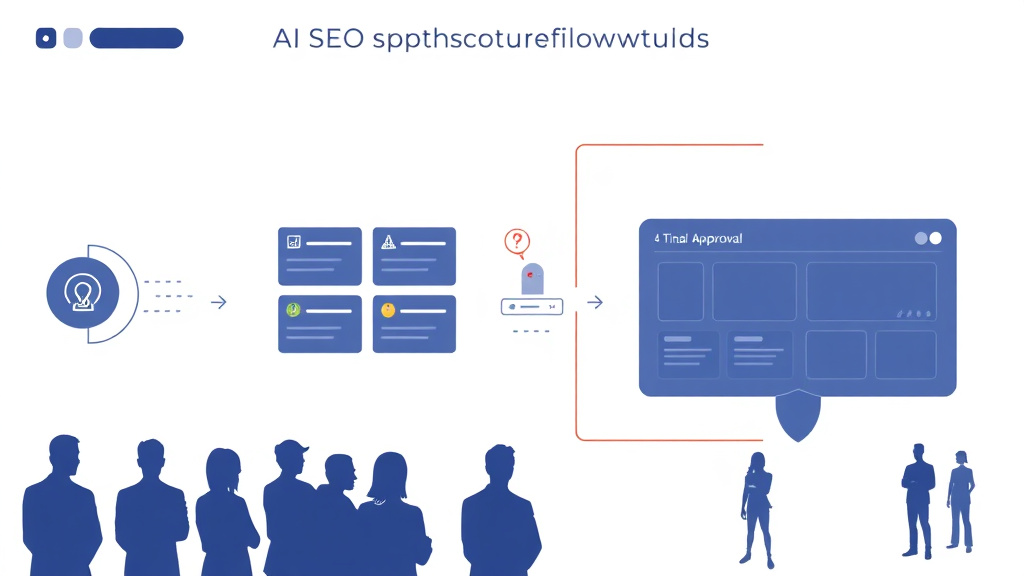
AI can accelerate SEO research, briefing, drafting, optimization, and publishing preparation. But speed without a clear review process creates a predictable set of risks: inaccurate claims, inconsistent messaging, weak internal links, unapproved product statements, missed compliance issues, and content that goes live before anyone verifies its search readiness.
An AI SEO approval workflow solves that problem. It gives your team a structured path from opportunity discovery to publication, with explicit decision points for people who own brand, product, legal, SEO, and editorial quality. The goal is not to slow AI down. The goal is to ensure AI handles repeatable work while humans make the decisions that require judgment, accountability, and context.
For SaaS companies, agencies, growth teams, founders, and PR operators, this approach is especially useful. SEO content often touches product positioning, customer outcomes, integration details, competitors, security, pricing, or industry-specific claims. Those are not areas where a generic “generate and publish” process is enough.
SALP SEO is designed around this operating model: research, AI visibility monitoring, competitor signals, keyword discovery, content approvals, publishing readiness, indexing checks, reporting, and optimization recommendations can work together in one governed workflow. The practical lesson is simple: build a repeatable system where every important change is visible, explainable, and approved before it reaches your audience.
What an AI SEO approval workflow is—and why it matters
An AI SEO approval workflow is a documented process that defines how a content asset moves from idea to publication. It identifies the work AI may assist with, the evidence required for decisions, the people responsible for review, and the criteria that must be met before publishing.
The workflow can apply to a new blog article, comparison page, product-led landing page, knowledge-base update, metadata refresh, internal-linking recommendation, or content optimization task. It is not limited to written drafts. Good governance covers every SEO-affecting change.
The principle: automate production, not accountability
AI is effective at producing first drafts, summarizing research, suggesting outlines, clustering keywords, identifying missing topical coverage, drafting metadata, and proposing links. Those tasks can reduce repetitive work substantially.
However, AI should not independently decide whether a claim is accurate, whether a product statement is current, whether a competitor comparison is fair, or whether a page should be published without review. Those decisions require people who understand the business and accept responsibility for the outcome.
A reliable division of work looks like this:
| Workflow activity | AI can assist with | Human approval should confirm |
|---|---|---|
| Keyword research | Grouping themes and suggesting opportunities | Business relevance and search intent priority |
| Content briefing | Drafting outlines and identifying questions | Audience fit, product alignment, and angle |
| Writing | Producing a structured first draft | Accuracy, voice, usefulness, and originality |
| Metadata | Suggesting titles and descriptions | Brand message and alignment with page content |
| Internal links | Recommending relevant target pages | Link relevance, anchor quality, and destination health |
| Schema preparation | Identifying appropriate structured-data fields | Factual accuracy and technical implementation |
| Publishing | Preparing a publication checklist | Final go-live authorization |
| Performance review | Highlighting changes and anomalies | Next actions and prioritization |
This distinction protects quality while preserving speed. Your team should not spend hours manually formatting every early draft. Instead, reviewers should concentrate on the decisions that can create brand, legal, search, or customer risk.
Why this matters more for AI-assisted SEO
Traditional editorial workflows already require review. AI changes the equation because it increases volume. A team that once produced four articles per month may now be able to prepare twenty. Without approval gates, the quantity of unreviewed output grows faster than the team’s capacity to validate it.
That leads to hidden operational debt. Published pages may contain outdated features, unsupported promises, duplicate angles, inconsistent terminology, or thin differentiation. Fixing those issues later takes more time than building a disciplined workflow at the start.
Approval-gated AI SEO also creates a stronger audit trail. When a stakeholder asks why a page was published, which evidence supported it, or who reviewed it, the team should be able to answer quickly. This is particularly valuable when content affects regulated industries, enterprise buyers, public-facing product claims, or sensitive brand categories.
Prerequisites for a controlled AI SEO publishing process
Before creating content at scale, establish a few practical foundations. You do not need a massive governance program. A one-page policy and a small pilot can be enough to begin.
Define clear roles and decision rights
Every workflow needs named owners. The same person can hold multiple roles on a small team, but the responsibilities should still be explicit.
A typical AI SEO workflow includes:
- SEO owner: Defines search opportunity, target intent, keyword focus, on-page requirements, and performance follow-up.
- Content strategist or editor: Shapes the brief, improves structure, protects readability, and verifies that the piece solves the reader’s problem.
- Subject matter expert: Checks technical, industry, product, or customer-facing claims.
- Brand reviewer: Ensures terminology, tone, positioning, and visual standards are consistent.
- Legal or compliance reviewer: Reviews regulated, contractual, financial, medical, privacy, security, or comparative claims when necessary.
- Publisher: Confirms CMS details, image rights, links, formatting, schema, and go-live readiness.
Avoid vague ownership such as “marketing reviews it.” That phrase often means no one knows who has final authority. Instead, state who can approve a draft, who can request changes, and who can make the final publication decision.
Create a one-page approval policy
A useful policy does not need legal-style complexity. It needs to answer practical questions that otherwise delay every piece of content.
Include these items:
- Content types covered: For example, blog articles, landing pages, product pages, comparison pages, help content, and optimization updates.
- Required reviewers by risk level: A basic educational article may need SEO and editorial approval, while a pricing or security page may also require product and legal review.
- Evidence requirements: Specify when claims need product documentation, customer approval, cited sources, or SME confirmation.
- Approval service-level targets: Define expected review windows so content does not sit in an indefinite queue.
- Escalation path: Explain what happens when reviewers disagree or a claim cannot be verified.
- Refresh policy: Set expectations for reviewing content after product launches, market shifts, or meaningful performance changes.
The policy should make publishing easier, not create bureaucracy. If a review gate is not protecting a meaningful risk, simplify it.
Build a shared source of truth
AI output improves when the inputs are controlled. Maintain a shared repository for the material used to create and review content.
Your repository may include:
- Approved product descriptions and feature definitions
- Brand voice and terminology guidance
- Customer proof points approved for public use
- Competitor comparison rules
- Keyword and topic-cluster documents
- Editorial briefs and content templates
- Internal-linking targets and pillar pages
- Standard metadata guidance
- Publishing and indexing checklists
- Previously approved examples
This repository reduces contradictory drafts and repeated reviewer comments. It also helps agencies and distributed teams work from the same current information instead of relying on scattered documents or memory.
Step-by-step: how to run an AI SEO approval workflow
The following process can work for a single article or a repeatable content program. Start with a pilot cluster of related pages before expanding to the entire content operation.
1. Select a search opportunity with a business purpose
Do not begin with a prompt such as “write an article about AI SEO.” Begin with a defined opportunity.
Clarify:
- Who is the reader?
- What question are they trying to answer?
- What stage of the journey are they in?
- Which product, service, or expertise area does the topic support?
- What existing pages should this asset strengthen?
- What evidence can the team use to make accurate claims?
For example, a SaaS company may identify that prospective buyers are searching for a seo publishing checklist before going live. The search intent is practical and informational. The content should not become a generic list of SEO tips. It should help teams safely move a page from draft to publication, while naturally connecting that need to an approval-gated workflow.
At this stage, assign an owner and decide the risk level. A general educational guide might be low risk. A page discussing data security, financial results, customer outcomes, or competitor claims should receive a higher review classification.
2. Build an evidence-first content brief
The brief is where speed becomes controlled quality. It provides enough direction for AI to generate useful material without inventing the editorial strategy.
A strong brief includes:
- Primary topic and supporting keywords
- Search intent and target audience
- The reader problem to solve
- Desired angle and point of view
- Required sections and questions
- Approved source material
- Claims that require validation
- Internal pages to link to
- Prohibited language or unsupported promises
- Required reviewers and publishing criteria
For an article on an AI SEO publishing workflow, a brief could specify that the page must explain approval gates, describe the roles involved, include a pre-publication checklist, and avoid claims that AI guarantees rankings. It could also direct the writer to explain how teams monitor indexing and performance after publication.
The most important field is often the evidence list. Ask: “What facts are we allowed to say?” If a product feature or customer statement is not in approved documentation, flag it for SME confirmation rather than allowing AI to fill the gap.
3. Generate the draft using constrained prompts and templates
Use prompts that reflect your approved brief, not broad requests for an article. A governed prompt includes role, audience, purpose, source material, prohibited claims, structural requirements, and review reminders.
For instance, tell the AI to:
- Use plain language for marketing and SEO operators.
- Distinguish recommendations from verified product capabilities.
- Mark uncertain claims for review rather than presenting them as facts.
- Include practical examples without fabricating customer stories.
- Use the approved brand vocabulary.
- Write metadata that accurately represents the article.
Templates make this even more reliable. Rather than starting every draft from a blank page, use approved patterns for guides, comparison pages, use cases, product explainers, and content refreshes.
This is where teams can save time without losing control. AI handles the initial structure and writing workload, while the template ensures the important review questions are consistently surfaced.
4. Review the draft in the right order
Reviewing everything at once creates inefficient feedback. Instead, use a sequence that catches high-impact problems before editors spend time polishing sentences.
A practical review order is:
- Strategy review: Does the draft match search intent, the brief, and the business purpose?
- Accuracy review: Are product, technical, customer, and industry claims supported?
- Editorial review: Is the article clear, helpful, original, and consistent with brand voice?
- SEO review: Are headings, topic coverage, metadata, internal links, images, and page elements appropriate?
- Compliance review when required: Are there regulated claims, sensitive statements, or approval requirements?
- Publishing review: Is the final page technically ready to go live?
This order prevents a common waste pattern: an editor spends an hour improving prose, then an SME discovers the central product claim is incorrect.
5. Complete the publishing checklist before going live
A content approval is not the same as publication readiness. The final check should cover the page as it will actually appear in the CMS.
Use this SEO publishing checklist before going live:
- Confirm the title reflects the page’s real subject and reader intent.
- Verify the meta title and description are accurate, useful, and non-duplicative.
- Check the URL for clarity, consistency, and unnecessary dates or parameters.
- Confirm one H1 is present and heading hierarchy is logical.
- Review all factual statements, product references, and calls to action.
- Confirm images are relevant, licensed or approved, compressed appropriately, and supplied with meaningful alt text where needed.
- Validate internal links, destination relevance, and anchor text.
- Check for broken links, accidental noindex tags, incorrect canonicals, and staging references.
- Apply the appropriate schema markup and verify that it matches visible page content.
- Preview on mobile and desktop for formatting issues.
- Confirm the page has received the required approvals.
For a schema markup checklist for AI-generated articles, focus on accuracy over volume. Article schema may be appropriate for editorial content. FAQ structured data should only represent questions and answers visibly present on the page, and it should not be used as a shortcut for adding claims that do not appear in the article. Never add markup simply because an AI tool suggested it.
6. Publish, monitor indexing, and close the learning loop
Publishing is the beginning of the measurement stage, not the end of the workflow.
Teams need a lightweight process for how to check if new content is indexed. First, verify that the page is publicly accessible and not blocked by technical directives. Then confirm it is included in relevant navigation, hub pages, sitemaps, or internal-linking paths. Monitor search visibility and indexing signals over time rather than assuming a published page will immediately be discovered or perform.
If a new page is indexed but receives little or no visibility, investigate the fundamentals:
- Does the topic match a real search need?
- Is the target query too broad or poorly aligned with the article’s angle?
- Does the page have enough internal links from relevant content?
- Is the article differentiated from existing pages?
- Does the title clearly communicate value?
- Are competitors addressing the topic in a more complete or more useful format?
SALP SEO’s operating model is useful here because research, approvals, monitoring, and optimization can remain connected. A team can identify a content opportunity, document the approval path, publish the asset, monitor visibility and mentions, and turn the resulting evidence into a prioritized next action.
Internal linking and content relationships
AI-generated content often includes links that are technically valid but strategically weak. A link may point to a loosely related page, repeat the same destination several times, use unnatural anchors, or miss the most important pillar page entirely.
That is why an internal linking workflow for AI content needs its own approval step.
How to review internal links in AI-generated content
Review links based on reader value first and SEO structure second. Every internal link should help the reader take a sensible next step.
Ask these questions:
- Does the destination genuinely expand on the sentence that contains the link?
- Is the anchor text descriptive without being repetitive or forced?
- Does the link support a relevant pillar, cluster, feature, or conversion path?
- Is the destination page live, current, indexable, and useful?
- Are important commercial pages receiving contextually relevant links from supporting content?
- Is the article missing a link to a foundational guide that readers would naturally need next?
Example: building a controlled topic cluster
Imagine a SaaS team has a pillar page on governed AI SEO. It plans supporting articles about approval gates, editorial briefs, content refreshes, indexing checks, and AI visibility monitoring.
The internal-linking plan could look like this:
| Content asset | Primary internal link | Secondary internal links | Review owner |
|---|---|---|---|
| Approval workflow guide | Governed AI SEO pillar | Content briefs, publishing checklist | SEO lead |
| Content brief playbook | Approval workflow guide | Keyword research, brand guidance | Editor and SEO lead |
| Indexing checklist | Governed AI SEO pillar | Technical checks, optimization guide | SEO lead |
| AI visibility monitoring guide | Platform overview | Competitor research, reporting guide | Product marketing and SEO |
This approach helps avoid random link placement. It also makes each new article contribute to a larger content system rather than becoming an isolated page.
Common mistakes that undermine approval-gated AI SEO
A workflow can look organized on paper but fail in practice. Most issues come from teams either over-automating decisions or adding so many review layers that content stops moving.
Treating approval as a final rubber stamp
If reviewers only see a polished draft at the end, they may discover strategic problems too late. They should be involved at the brief stage for high-stakes pages. Early agreement on audience, claims, and positioning reduces major rewrites.
Asking AI to supply evidence it does not have
AI can create confident language around incomplete information. Avoid prompts that imply every gap must be filled. Instead, instruct the system to use approved sources, identify missing information, and flag claims requiring human validation.
Using the same review path for every page
Not all content requires legal, product, brand, and executive review. Apply approvals proportionally.
A simple risk model may be:
- Low risk: Educational articles with no sensitive claims.
- Medium risk: Product-adjacent content, integrations, or industry recommendations.
- High risk: Pricing, security, legal, medical, financial, customer proof, or competitor comparison content.
This lets the team protect sensitive pages without creating unnecessary delay for routine work.
Confusing SEO checks with quality checks
A page can include the target keyword, schema, and internal links while still being unhelpful. SEO quality includes usefulness, clarity, audience fit, accuracy, and a meaningful point of view. Reviewers should assess the whole reader experience, not merely the checklist.
Publishing without a post-launch owner
A common failure is treating content as complete once it is live. Every published asset needs a named owner, a monitoring period, and a next review date. That turns content into a maintained business asset rather than a one-time campaign deliverable.
A practical 30-day rollout plan
You do not need to redesign your entire marketing organization to adopt approval-gated AI SEO. Start with one topic cluster and improve the process based on what your team learns.
Week 1: map the workflow
Document the current path from keyword idea to published page. Identify bottlenecks, missing decisions, and recurring errors. Then create a one-page governance policy and assign owners.
Choose one content type for the pilot, such as educational blog articles for a SaaS audience. Avoid beginning with highly sensitive pages.
Week 2: create reusable inputs
Build a content brief template, prompt template, review checklist, and publishing checklist. Gather approved product information, style guidance, linking targets, and examples of strong existing content.
Set clear approval expectations. For example, the SEO owner reviews intent and structure, the editor reviews clarity and voice, and an SME reviews product claims only when the content references product functionality.
Week 3: run the pilot cluster
Produce two to four related pieces using the new workflow. Track where revisions occur and why. If reviewers repeatedly flag the same issue, add a rule to the brief or prompt rather than relying on people to catch it forever.
For example, if AI repeatedly uses broad claims such as “guarantees better rankings,” add a prohibited-claims section to the template. If internal links are inconsistent, create a defined linking map for the cluster.
Week 4: review and standardize
Assess the pilot using operational questions:
- Did the team publish faster without lowering standards?
- Which gate caught the most important issues?
- Which reviews created unnecessary delay?
- Were briefs detailed enough to produce usable first drafts?
- Did the workflow make responsibilities clearer?
- What should become a default template or automated check?
Then revise the workflow before scaling. The goal is not perfection on the first attempt. It is a repeatable system that improves with each publishing cycle.
Key takeaways and next actions
Approval-gated AI SEO is a way to scale content operations without handing brand control to a generation tool. The strongest programs treat AI as an assistant within a documented operating system: evidence enters first, humans approve important decisions, and performance feedback improves the next round of work.
| Priority | Practical action | Expected benefit |
|---|---|---|
| Establish ownership | Name approvers and final publishers | Fewer stalled decisions and unclear accountability |
| Standardize inputs | Use approved briefs, prompts, and source material | More consistent drafts and fewer revisions |
| Apply risk-based gates | Add deeper review for sensitive content | Better control without slowing routine work |
| Check go-live readiness | Validate metadata, links, schema, and technical settings | Fewer preventable publishing errors |
| Monitor after publishing | Review indexing, visibility, and content signals | Faster identification of pages needing improvement |
| Improve the system | Turn recurring feedback into templates and rules | A workflow that gets faster over time |
The best place to start is small: choose one cluster, define the approvals, use a shared brief, and create a simple go-live checklist. Once the process is working, expand it to other content types, teams, and markets.
Explore Salp SEO for next steps.
Tactics That Scale Trust and Traffic for AI SEO | SALP SEO
Frequently asked questions
What is an AI SEO approval workflow?
An AI SEO approval workflow is a documented process for using AI in SEO tasks while requiring designated human review before important actions, claims, or pages are published. It covers research, briefs, drafting, editing, metadata, internal links, schema, publishing checks, and post-launch monitoring.
Who should approve AI-generated SEO content?
At minimum, an SEO owner and editor should review most content. Add subject matter experts for product, technical, or industry claims; brand reviewers for positioning and voice; and legal or compliance reviewers for sensitive or regulated topics.
Does every AI-generated article need legal review?
No. Use a risk-based approach. Routine educational content may only need editorial and SEO approval, while pages involving legal, financial, security, medical, pricing, customer, or competitor claims may need additional review.
What should be checked before publishing AI-generated content?
Confirm factual accuracy, alignment with the brief, brand voice, heading structure, metadata, internal links, image approvals, schema accuracy, mobile formatting, technical indexability, and completion of all required approval gates.
How should teams review internal links in AI-generated content?
Check whether every link is relevant to the surrounding text, helps the reader take a logical next step, uses natural anchor text, points to a live and useful destination, and supports the intended topic-cluster structure.
How can I check whether a newly published page is indexed?
First confirm that the page is public and not blocked by noindex directives, robots rules, canonicals, or technical errors. Ensure it is linked from relevant pages and included in the appropriate sitemap or site structure, then monitor indexing and search visibility over time.