From AI Drafts to Publish-Ready: Build a Smarter SEO Approval Workflow
Learn how to approach ai seo workflow approval process with practical steps, examples, risks, FAQs, and next actions.
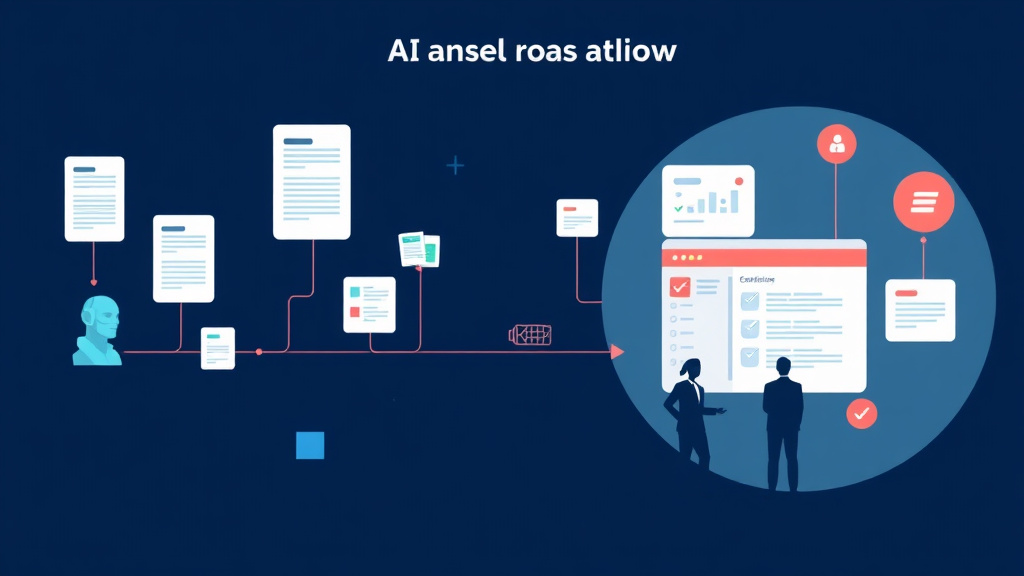
AI can help SEO teams move from a blank page to a useful first draft quickly. But speed alone does not create trustworthy, high-performing content. Without a clear approval process, AI-assisted work can introduce inaccurate claims, inconsistent product messaging, weak search intent alignment, duplicated topics, or content that is published before it is technically ready to be discovered.
A smarter AI SEO workflow approval process gives teams the best of both worlds: faster research and production, plus deliberate human judgment before high-impact work goes live. It turns AI from an unpredictable content generator into a controlled operating layer for research, briefs, drafting, review, publishing, indexing checks, and optimization.
For SaaS companies, agencies, enterprise marketing teams, founders, and PR operators, this matters because SEO content often touches sensitive areas. A product page may need product-team validation. A comparison page may require legal review. A thought-leadership article may need subject-matter expertise. A reputation-related page may need brand and communications approval. The answer is not to avoid AI. The answer is to define where AI can accelerate the work and where people must make the final call.
This guide explains how to build an approval-gated AI SEO workflow that is practical enough for a small team and structured enough to scale across multiple stakeholders.
Why an AI SEO approval process matters
An AI SEO workflow is the sequence your team follows to turn a search opportunity into a monitored, publish-ready asset. The approval process is the set of decision points within that workflow: who reviews the work, what they check, what must be corrected, and what can be published.
The goal is not to create a long chain of meetings. It is to prevent expensive mistakes while keeping work moving.
A useful approval process helps teams protect five things:
- Search intent alignment. The finished page should answer the question a real searcher has, not merely repeat a keyword.
- Accuracy. Claims about products, competitors, regulations, pricing, capabilities, or outcomes need validation.
- Brand consistency. AI drafts should follow the same voice, terminology, positioning, and editorial standards as the rest of the site.
- Technical quality. Metadata, internal links, image details, schema, canonical signals, and indexability should be checked before or immediately after publishing.
- Accountability. A clear record of ownership and approvals makes it easier to improve the process instead of blaming the tool or a teammate when something goes wrong.
Traditional content workflows often separate SEO research, writing, editing, publishing, and reporting into disconnected tools and handoffs. That can make teams slow, especially when they manage multiple product lines or clients. A governed AI workflow centralizes those steps while retaining approval gates for sensitive actions.
| Workflow element | Uncontrolled AI publishing | Approval-gated AI SEO workflow |
|---|---|---|
| Topic selection | AI chooses broad ideas with limited context | Team validates opportunity, audience, and business relevance |
| Content drafting | Draft is published with minimal review | AI creates a structured draft for human review |
| Brand voice | Often inconsistent between pages | Prompts, templates, and editorial rules guide output |
| Product claims | May be outdated or unsupported | Product or subject-matter reviewers approve claims |
| SEO QA | Often deferred or missed | Metadata, links, schema, and indexability are checked |
| Learning loop | Results are disconnected from creation | Performance insights inform refreshes and future briefs |
The key distinction is simple: AI can recommend, organize, and draft; designated people approve decisions that affect the brand, customer trust, compliance, and publishing quality.
What approval-gated means in practice
Approval-gated does not mean every paragraph needs approval from every department. It means the workflow has explicit checkpoints based on risk.
For example, a low-risk glossary article may only need a content lead to approve the brief and final page. A high-stakes enterprise comparison page may need an SEO lead, product marketer, legal reviewer, and brand editor to approve different parts of the work.
A sensible process distinguishes between:
- Routine decisions: keyword grouping, first-draft outlines, suggested internal links, headline variations, and formatting improvements.
- High-impact decisions: factual product claims, regulated advice, customer statements, pricing references, competitor comparisons, publishing, and major content removals or redirects.
This approach prevents bottlenecks because review effort follows risk rather than habit.
The operating model: evidence first, human approved
A dependable workflow starts with evidence. Before drafting, the team should know why a page deserves to exist, who it serves, what search intent it addresses, and how it supports a broader content cluster.
SALP SEO is designed around this operating model: AI-assisted research, content approvals, visibility monitoring, indexing checks, reporting, and optimization recommendations work together in one governed workflow. Instead of treating content production as a separate activity from search intelligence, teams can connect the page brief, approval history, published asset, and performance review.
Prerequisites for a reliable AI SEO workflow
Before creating articles at scale, establish the minimum structure that makes approvals quick and meaningful. A sophisticated enterprise system can come later. Start with a one-page policy, clear roles, and a repeatable content blueprint.
Define your roles and decision rights
Every page needs an owner. Every approval gate needs a named reviewer. If people are not clear on who can make a decision, drafts linger and urgent publishing requests become chaotic.
A practical team structure may include the following roles:
| Role | Primary responsibility | Typical approval scope |
|---|---|---|
| SEO lead | Opportunity selection, keyword targeting, technical SEO | Brief, on-page SEO, internal links, indexing checks |
| Content strategist | Content plan, angle, structure, editorial quality | Outline, draft quality, content fit |
| Writer or AI operator | Draft creation, revisions, source organization | Pre-review self-check |
| Subject-matter expert | Technical, industry, or product accuracy | Specialist claims and examples |
| Product marketer | Positioning, feature language, customer relevance | Product references and messaging |
| Brand or PR lead | Tone, reputation, sensitive narratives | Brand-sensitive content |
| Legal or compliance reviewer | Regulated, contractual, or comparative statements | High-risk claims only |
| Publisher | CMS implementation and final QA | Publishing checklist completion |
For a small SaaS company, one person may hold several roles. That is fine. The important part is that responsibilities are visible. For an agency, assign equivalent roles internally and clarify which approvals belong to the client.
Create a one-page governance policy
Your policy should be short enough that people actually use it. It can cover:
- Which content types AI may help draft.
- Which claims always require a human source check.
- Who approves work by topic or risk level.
- Expected review service-level agreements, such as one business day for routine drafts.
- What happens if a reviewer rejects or requests revisions.
- When a page needs legal, product, PR, or executive review.
- How the team records final approval.
Avoid writing a policy that says every asset requires every stakeholder. That creates unnecessary delay. Instead, define tiers.
For instance, an educational article on a stable topic may be Tier 1 and need SEO plus editorial approval. A product-led article referencing customer outcomes may be Tier 2 and require product marketing. A comparison or compliance article may be Tier 3 and require an additional expert or legal check.
Build reusable briefs, prompts, and checklists
AI works best when it receives enough context. A vague prompt such as “write an article about SEO approvals” will usually produce a generic article. A useful content blueprint tells the system and the human editor what success looks like.
Each brief should include:
- Primary query and supporting topics.
- Search intent and target reader.
- Page purpose within the site architecture.
- Required points, examples, and product context.
- Claims that need verification.
- Internal pages to link to.
- External source requirements where appropriate.
- Required metadata, image direction, and schema recommendations.
- Reviewer names and approval tier.
Store these materials in a shared repository. The repository should include approved terminology, positioning language, competitor-comparison rules, editorial examples, image standards, and common review comments. This reduces repetitive feedback and makes it easier for new team members to produce work that fits the brand.
Set a baseline for measurement
An approval process should improve outcomes, not simply create documentation. Track a manageable set of metrics across three categories:
- Workflow health: approval cycle time, revision rounds, percentage of content approved on first review, and blocked tasks.
- Technical health: publishing status, indexability, sitemap inclusion, canonical consistency, and internal-link coverage.
- Content performance: impressions, clicks, click-through rate, average position, engagement indicators, assisted conversions where available, and content refresh outcomes.
Do not use metrics to punish contributors for normal search volatility. Use them to identify patterns. If pages are being approved quickly but never indexed, the issue may be discoverability or site architecture. If pages are indexed but not earning impressions, revisit targeting, content depth, internal links, and alignment with the search landscape.
Step-by-step: from AI draft to publish-ready page
The strongest workflows make the status of every asset obvious. A team should be able to see whether a page is in research, awaiting a brief approval, being drafted, with a reviewer, scheduled, published, or under performance review.
Step 1: Select the opportunity before generating content
Start with a search or business opportunity, not a content quota. Review your existing content, customer questions, product roadmap, competitor coverage, search visibility gaps, and emerging topics found in AI search, Google, social channels, news, reviews, or industry conversations.
Then decide whether the best next action is to:
- Create a new page.
- Refresh an existing page.
- Consolidate overlapping pages.
- Improve internal links to a valuable but under-discovered asset.
- Build a supporting article around an existing pillar.
- Hold the idea because the team cannot yet support the claims responsibly.
Example: A SaaS company notices prospects repeatedly asking how AI-generated SEO content can remain brand safe. Rather than publishing several near-duplicate “AI content” articles, the SEO lead creates one pillar on governed AI SEO and supporting pages on approval workflows, content briefs, indexing checks, and content refreshes.
This cluster approach gives each page a distinct job and makes internal linking more purposeful.
Step 2: Approve the brief, not just the finished draft
Approving the brief early is one of the fastest ways to reduce rework. A five-minute review of the audience, angle, outline, and claim boundaries can prevent hours of rewriting later.
Before the draft begins, reviewers should confirm:
- The target audience is specific.
- The page answers a distinct search intent.
- The outline is complete but not padded.
- The business angle is relevant without overwhelming the educational value.
- High-risk statements are clearly marked for verification.
- The planned internal links support useful navigation.
- The content does not duplicate an existing URL.
For an agency, send clients an approval-friendly brief rather than a vague promise of “three AI articles this month.” A client can approve a page’s strategic direction much more easily than they can untangle a finished article built on the wrong premise.
Step 3: Generate a structured AI draft with constraints
At this stage, AI can accelerate the work substantially. Give it the approved brief, brand voice guidelines, terminology rules, audience needs, desired depth, and explicit instructions about unsupported claims.
Ask AI to produce components that are easy to review:
- A draft title and metadata options.
- A clear H1 and logical heading structure.
- A practical introduction.
- Examples, checklists, and comparison tables where helpful.
- Suggested internal links with anchor-text ideas.
- A list of factual claims or statements needing source checks.
- A concise conclusion and relevant next action.
Do not ask AI to manufacture proof. If the article needs examples, use clearly labeled hypothetical scenarios or real examples that your team can verify. If it needs evidence, provide approved sources and ask the writer or reviewer to validate how they are used.
A good drafting prompt should say what AI must not do as well as what it should do. For example: do not make performance promises, do not state current product details without approved inputs, do not present generalized advice as legal guidance, and do not invent customer outcomes.
Step 4: Run a self-review before formal approval
The person preparing the draft should complete a self-review. This keeps reviewers focused on judgment instead of catching preventable formatting errors.
Use a pre-review checklist:
- Does the page fully answer the stated search intent?
- Is the opening specific and useful?
- Are claims accurate, sourced, or flagged for verification?
- Does the language match approved brand terminology?
- Are headings descriptive and easy to scan?
- Are examples realistic and clearly framed?
- Does every section add value rather than repeat prior points?
- Are internal-link suggestions relevant and non-forced?
- Are title tag and meta description accurate and compelling?
- Are any sensitive claims routed to the right reviewer?
This is also the point to remove AI patterns that weaken trust: empty transitions, repetitive conclusions, generic superlatives, unnecessary lists, and phrases that sound polished but say little.
Step 5: Route the draft through focused human reviews
A formal review should be focused. Reviewers should not all comment on everything.
The SEO lead checks intent alignment, keyword coverage, heading hierarchy, internal linking, metadata, and technical recommendations. The editor checks clarity, structure, readability, and consistency. The product reviewer checks product references. A subject-matter expert checks technical accuracy. Brand, PR, or legal reviewers only join when the risk tier requires them.
A simple status model works well:
| Status | Meaning | Owner |
|---|---|---|
| Brief proposed | Opportunity and outline are ready for review | SEO lead or strategist |
| Brief approved | Draft may begin | Assigned approver |
| Draft ready | Writer completed self-review | Writer or AI operator |
| Changes requested | Specific edits are needed | Reviewer and writer |
| Approved to publish | Required gates are complete | Content or SEO owner |
| Published and checking | Live page is undergoing technical review | Publisher or SEO lead |
| Monitoring | Performance and refresh decisions are tracked | SEO lead |
Set reviewer expectations. Comments should identify the issue, why it matters, and the desired resolution. “Make this better” is not an actionable review comment. “Replace this product claim with approved language from the current product page” is.
Step 6: Complete publishing and indexing checks
A page is not complete when the text is approved. Publishing quality affects whether search engines and readers can find and understand it.
Before publishing, check:
- Final URL and slug are clean and consistent.
- Title tag, meta description, and H1 accurately describe the content.
- Headings are properly structured.
- Images have useful alt text where relevant.
- Internal links point to live, appropriate pages.
- Outbound references are accurate when used.
- Canonical settings are correct.
- Relevant structured data is considered and validated.
- The page is not accidentally blocked from indexing.
- The page can be included in the sitemap when appropriate.
After publishing, perform lightweight indexing checks. Confirm the page returns correctly, is internally linked from relevant pages, is eligible for discovery, and has no obvious canonical or crawl barriers. If a live page receives no search visibility over time, revisit its query targeting, internal-link support, sitemap discoverability, and content differentiation rather than assuming publishing alone solved the problem.
Step 7: Monitor, learn, and refresh through the same gates
AI SEO is not a one-time production process. Product details change, search results evolve, competitors publish new content, and AI search may surface different sources or narratives.
Schedule a review cadence based on content type. Product-led articles may need refreshes around roadmap releases. Competitive pages may need more frequent review. Foundational educational content can be reviewed less often, unless performance or market signals suggest a change.
When refreshing a page, use the same governance gates as a new draft. A small update may only need SEO approval. A major rewrite containing new claims should go back through product, brand, or legal review as needed.
Common mistakes that slow teams down or create risk
A workflow can fail in two opposite ways: it can be too loose to protect quality, or too heavy to support execution. The goal is controlled momentum.
Mistake 1: Publishing directly from an AI prompt
The fastest route to low-quality content is treating a first draft as final copy. AI output can be useful, but it may miss business context, make confident but unsupported statements, or sound similar to content already available elsewhere.
Better approach: require a brief approval, a draft self-review, and a final publishing gate. For routine content, these can be fast checkpoints rather than lengthy meetings.
Mistake 2: Making every stakeholder approve every page
Over-review creates slow queues and encourages people to bypass the process when deadlines are tight. A brand lead does not need to review a basic glossary update, and legal does not need to review every ordinary educational statement.
Better approach: use risk tiers and route work based on topic, claims, and business impact.
Mistake 3: Treating SEO review as keyword insertion
Keyword usage alone does not create a useful page. If the article does not satisfy the reader’s need, it is unlikely to earn sustained engagement or visibility.
Better approach: review the page against search intent. Ask whether it gives the reader a clear decision, process, explanation, or next step that matches the query.
Mistake 4: Ignoring technical readiness
An excellent article can still underperform if it is orphaned, poorly linked, blocked from indexing, duplicated, or published with weak metadata.
Better approach: make technical QA a required part of the workflow, then monitor indexing and visibility after publication.
Mistake 5: Failing to capture recurring review feedback
If reviewers repeatedly correct the same product language, tone issue, or formatting problem, the workflow is not learning.
Better approach: turn recurring feedback into prompt instructions, templates, approved language libraries, and checklist items. That is how each approval cycle becomes faster and more consistent.
A practical workflow blueprint for teams of different sizes
You do not need the same process as a large enterprise. Start with the smallest version that protects your highest-risk decisions, then add rigor where it earns its place.
Lean workflow for founders and small marketing teams
A small team can use three gates:
- Brief approval: confirm query, audience, angle, and required facts.
- Editorial and factual review: check clarity, claims, and brand fit.
- Publish and index check: verify technical readiness and monitor the page after launch.
The founder, content marketer, and SEO operator may cover these responsibilities together. Document decisions in the project record so a future contractor or teammate can understand why the page was created.
Scaled workflow for SaaS and enterprise teams
Larger teams benefit from role-based approvals, content tiers, reporting, and clear service-level expectations. They may also need approval requirements for product launches, regulated markets, brand-sensitive topics, regional pages, and customer references.
The workflow should still be simple to follow. Centralized project visibility is more valuable than a complicated approval maze. Teams should be able to see the current draft, source notes, assigned reviewers, comments, approval history, publishing status, and post-publication results in one place.
Agency workflow for multiple clients
Agencies need a clear separation between work that can be approved internally and work that requires client signoff. Define client review windows, escalation paths, and what happens when feedback is late.
A useful agency rule is: do not let a client’s delayed reply become invisible. Keep the status visible, record the approver, and show the impact on publishing timelines. This protects the relationship and helps both sides improve the process.
Key takeaways and next actions
A governed AI SEO workflow is not about slowing down content production. It is about making fast production dependable. The best systems combine AI speed with human accountability, evidence, and ongoing performance learning.
| Priority | Action | Why it matters |
|---|---|---|
| Start here | Create a one-page approval policy | Clarifies ownership and prevents review confusion |
| Improve quality | Approve briefs before drafting | Reduces rework and keeps content strategically aligned |
| Reduce risk | Apply review tiers based on claim sensitivity | Protects high-stakes pages without overloading routine work |
| Publish confidently | Add metadata, links, schema, and index checks | Supports discovery and technical quality |
| Scale intelligently | Turn recurring feedback into templates and prompts | Makes each production cycle more consistent |
| Keep improving | Review performance and refresh through governance gates | Connects content operations to real search outcomes |
Start with one pilot cluster rather than changing your entire content operation at once. Choose a meaningful set of pages, define the brief template and approval gates, assign owners, publish a small number of assets, and review what created delays or rework. Then refine the policy based on what your team learns.
Frequently asked questions
What is an AI SEO workflow approval process?
It is a structured process for researching, creating, reviewing, publishing, and monitoring AI-assisted SEO work. It defines which steps AI can support, which decisions require human approval, and how the team verifies quality before content goes live.
Who should approve AI-generated SEO content?
The right approver depends on the page. An SEO lead and editor may be enough for low-risk educational content. Product marketers, subject-matter experts, brand leads, PR teams, or legal reviewers should be involved when content includes product claims, sensitive narratives, regulated guidance, customer statements, or competitor comparisons.
Does approval-gated AI SEO make content production too slow?
Not when the workflow is designed well. Approving the brief early, using reusable templates, and routing reviews according to risk can reduce rewriting and prevent late-stage surprises. The aim is to concentrate review effort where it has the greatest value.
What should be checked before publishing an AI-assisted article?
Check search intent, factual accuracy, brand voice, heading structure, metadata, internal links, images, canonical settings, indexability, and any applicable schema. Confirm that all required reviewers have approved high-risk claims before the page is published.
How do we prevent AI drafts from sounding generic?
Give AI detailed context: the target reader, the search intent, the product or market context, approved terminology, required examples, content structure, and statements to avoid. Then have an editor remove repetition, vague claims, filler transitions, and unsupported conclusions.
How often should we refresh AI SEO content?
Refresh timing depends on how quickly the topic changes. Review product-related and competitive pages more often, especially after launches or market shifts. Review evergreen educational pages on a scheduled cadence or when visibility, engagement, internal-linking opportunities, or search intent changes indicate a need.
Can an approval workflow help with AI search visibility as well as Google search?
Yes. The same fundamentals apply: accurate claims, clear entity and product information, useful structure, credible evidence, consistent brand language, technical accessibility, and ongoing monitoring. A governed workflow helps teams respond to changing visibility signals without publishing rushed or unverified updates.
Conclusion
AI can make SEO teams faster, but speed becomes a liability when there is no shared process for deciding what is accurate, on-brand, technically ready, and worth publishing. A smarter approval workflow gives every draft a path from idea to evidence-backed, publish-ready content.
Build the system around clear roles, approved briefs, focused review gates, technical checks, and a performance loop. Keep it lightweight at first. Improve it using the actual feedback, delays, and content outcomes your team sees. Over time, the workflow becomes a durable content operations advantage: faster execution without losing control.
Explore Salp SEO for next steps. Use one operating system to connect AI visibility monitoring, competitor research, keyword discovery, content blueprints, approvals, publishing readiness, indexing checks, performance tracking, and optimization recommendations.
Frequently asked questions
What is an AI SEO workflow approval process?
It is a structured process for researching, creating, reviewing, publishing, and monitoring AI-assisted SEO work. It defines which steps AI can support, which decisions require human approval, and how the team verifies quality before content goes live.
Who should approve AI-generated SEO content?
The right approver depends on the page. SEO and editorial approval may be enough for low-risk educational content, while product, subject-matter, brand, PR, or legal reviewers should participate for sensitive claims.
Does approval-gated AI SEO slow production?
A well-designed process should reduce rework. Early brief approval, reusable templates, clear ownership, and risk-based review routing allow teams to move quickly while protecting high-impact decisions.
What should be checked before publishing an AI-assisted article?
Check search intent, factual accuracy, brand voice, metadata, headings, internal links, images, canonical settings, indexability, and relevant schema. Confirm that required reviewers have approved sensitive claims.
How can teams stop AI SEO drafts from sounding generic?
Provide specific context such as audience, search intent, brand terminology, approved examples, product context, required sections, and claims to avoid. Use human editing to remove repetition, filler, and unsupported assertions.
How often should AI SEO content be refreshed?
Refresh timing depends on topic volatility. Product-led and competitive pages often need more frequent review, while evergreen educational pages can be reviewed on a scheduled cadence or when performance and market signals change.