Approval-Gated AI SEO Workflows: Scaling Enterprise Content Without Chaos
Learn how to approach approval-gated AI SEO workflows for enterprise teams with practical steps, examples, risks, FAQs, and next actions.
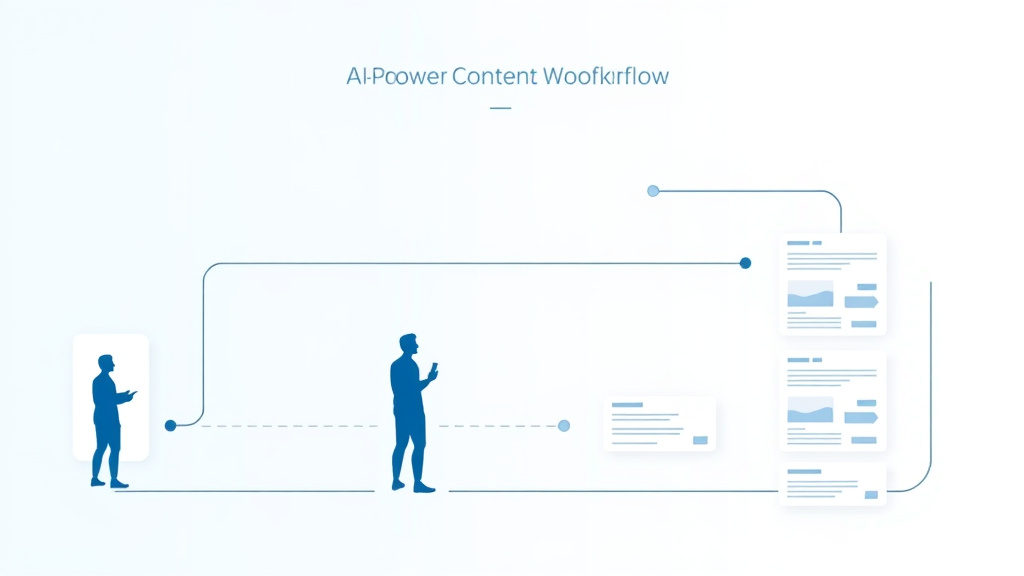
Enterprise teams want the speed of AI without the risk of publishing errors, off-brand messaging, or SEO regressions. Approval-gated AI SEO workflows solve this by combining automation with structured human review. The result is a system that scales output while protecting quality, compliance, and brand integrity.
SALP SEO represents this model as an operating system: research, generation, approvals, publishing, indexing, and performance tracking all connected in one controlled loop. Instead of chasing tools, teams orchestrate a repeatable process that balances automation with accountability.
How to approval-gated ai seo workflows for enterprise teams
What “approval-gated” actually means
Approval-gated workflows require explicit human sign-off before any content or optimization goes live. AI can draft, cluster, and optimize—but it cannot publish autonomously.
This model introduces:
- Defined roles (strategist, AI generator, editor, approver).
- Clear checkpoints before publishing.
- Measurable criteria for quality and readiness.
Why enterprises need it
Large organizations face complexity: multiple stakeholders, compliance constraints, and high brand risk. Approval-gated workflows help by:
- Reducing publishing errors and reputational risk.
- Aligning content with brand voice and legal requirements.
- Maintaining SEO consistency across hundreds or thousands of pages.
Example scenario
A SaaS company scaling onboarding content uses AI to draft 50 articles. Instead of auto-publishing, each piece passes through:
- SEO validation (keywords, intent alignment).
- Editorial review (clarity, tone).
- Product accuracy check.
- Final approval gate before indexing.
This prevents misinformation while preserving speed.
Prerequisites
Organizational setup
Before implementing approval-gated workflows, establish:
- Clear ownership: who creates, reviews, and approves.
- A documented approval policy (even one page is enough to start).
- Defined SLAs for review cycles.
Technical foundation
Your system should include:
- Keyword research and clustering capability.
- Content generation tools aligned with brand voice.
- Internal linking and sitemap management.
- Indexing and performance monitoring.
Content readiness
Prepare inputs that guide AI effectively:
- Target audience definitions.
- Search intent mapping.
- Existing content inventory.
Governance baseline
Create rules AI must follow:
- Tone and voice guidelines.
- Compliance constraints (legal, product claims).
- SEO structure standards (headings, schema, links).
Step-by-step process
1. Define roles and responsibilities
A typical enterprise workflow includes:
- Content strategist: sets direction and clusters.
- AI content generator: produces drafts.
- Human editor: refines clarity and tone.
- SEO analyst: validates optimization.
- Final approver: signs off before publishing.
2. Build keyword clusters and content blueprints
Instead of isolated articles, create structured clusters:
- Pillar pages targeting broad topics.
- Supporting articles addressing subtopics.
Each blueprint should include:
- Target keyword and intent.
- Outline and structure.
- Internal linking plan.
3. Generate AI-assisted drafts
Use AI to produce first drafts quickly, guided by:
- Brand voice prompts.
- Structured outlines.
- Predefined SEO rules.
Key principle: AI generates, humans validate.
4. Apply editorial and SEO review gates
Introduce checkpoints before publishing:
- Editorial review: readability, tone, clarity.
- SEO validation: keyword placement, headings, metadata.
- Fact-checking: accuracy and product alignment.
5. Run publishing checks
Before going live, confirm:
- Metadata is complete.
- Internal links are added.
- Schema markup is applied.
- Images and alt text are included.
6. Approve and publish
Only approved content is published and indexed. This prevents low-quality pages from entering search ecosystems.
7. Monitor performance and iterate
Track performance continuously:
- Indexing status.
- Engagement signals.
- Visibility trends across search and AI platforms.
Use insights to refine prompts, workflows, and content strategy.
Example workflow timeline
| Stage | Owner | Output |
|---|---|---|
| Strategy | Content strategist | Keyword clusters |
| Drafting | AI + content team | First draft |
| Editing | Editor | Refined article |
| SEO review | SEO analyst | Optimized content |
| Approval | Manager | Publish-ready page |
Common mistakes
Over-automation without control
Allowing AI to publish directly often leads to:
- Inaccurate content.
- Brand inconsistency.
- SEO penalties over time.
Vague approval criteria
Without clear standards, approvals become subjective and slow. Define:
- What “ready to publish” means.
- Minimum SEO requirements.
- Content quality benchmarks.
Ignoring internal linking
Even strong content underperforms without:
- Proper linking between related pages.
- Clear site structure.
Skipping indexing checks
Publishing is not the finish line. Teams must verify:
- Pages are discoverable.
- No technical issues block indexing.
Treating AI as a replacement, not an assistant
AI should accelerate workflows—not replace human judgment. The strongest teams use AI for speed and humans for accuracy.
Blueprint requirements
Core components of a scalable system
An effective approval-gated AI SEO system includes:
- Research engine: keywords, competitors, intent.
- Content engine: AI generation with structured prompts.
- Approval workflow: defined gates and responsibilities.
- Publishing system: controlled release and indexing.
- Monitoring dashboard: performance and visibility tracking.
Governance checklist
- Every publish requires human approval.
- Content aligns with brand and compliance rules.
- SEO standards are consistently applied.
- Performance data feeds back into strategy.
Comparison: gated vs non-gated workflows
| Aspect | Approval-gated | Non-gated automation |
|---|---|---|
| Content quality | High, consistent | Variable, often inconsistent |
| Risk level | Controlled | High |
| Scalability | Sustainable | Fragile |
| Brand alignment | Strong | Often inconsistent |
| SEO performance | Stable long-term | Unpredictable |
Practical tips for enterprise teams
- Start with a pilot cluster before scaling.
- Document workflows simply; avoid over-engineering.
- Use dashboards to align teams on performance.
- Iterate based on real data, not assumptions.
Real-world application
A B2B SaaS team uses SALP SEO to manage content across multiple markets. By implementing approval gates, they:
- Maintain consistent messaging across regions.
- Avoid duplicate or conflicting content.
- Align SEO efforts with product updates.
Key takeaways
| Principle | Action |
|---|---|
| Control beats speed | Always require approval before publishing |
| Structure drives scale | Use clusters and blueprints |
| Visibility requires monitoring | Track indexing and performance |
| AI needs governance | Define prompts, rules, and roles |
Conclusion
Approval-gated AI SEO workflows are not about slowing down content production—they are about making scale sustainable. Enterprises that adopt this model gain the ability to produce large volumes of content without sacrificing quality, compliance, or search performance.
By combining structured workflows, human oversight, and AI acceleration, teams can build a reliable system that grows visibility across both traditional search engines and emerging AI-driven discovery platforms.
FAQ
SALP SEO - AI SEO Intelligence Platform
SALP SEO - AI SEO Intelligence Platform