A Practical Guide to Automate Semantic Keyword Clustering for Beginners
Learn how to approach automate semantic keyword clustering with practical steps, examples, risks, FAQs, and next actions.
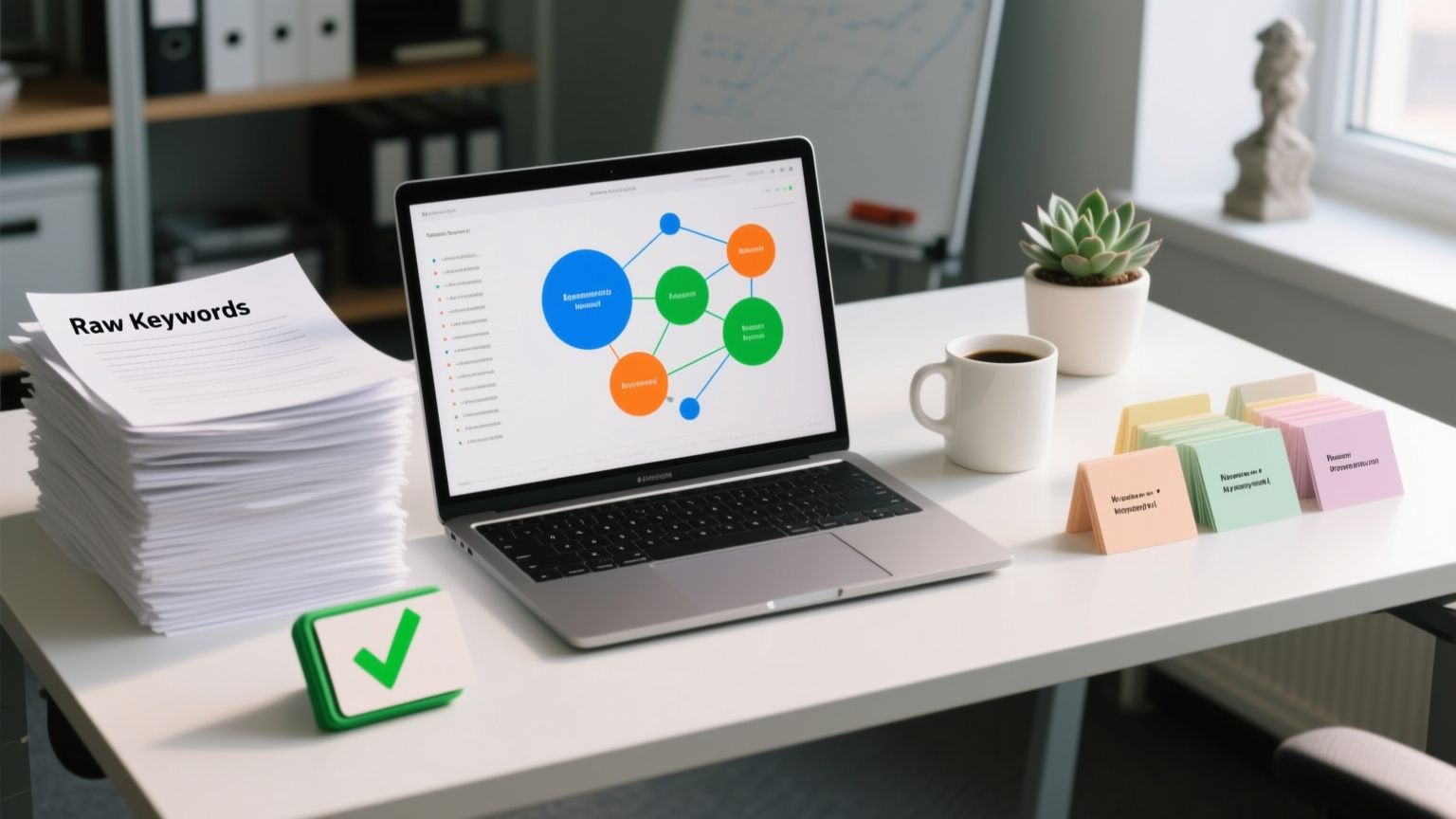
“Automation without governance is a fast road to noise.” – SALP SEO
In 2024‑2026 the SEO landscape has shifted from pure keyword‑by‑keyword targeting to semantic, intent‑driven clustering. Search engines—especially AI‑augmented results—now surface answers based on concepts, entities, and the relationships between them. For marketing teams, founders, agencies, SaaS product marketers, and PR professionals, the ability to automate semantic keyword clustering while retaining human oversight is a competitive advantage.
This guide walks you through everything a beginner needs to know:
- The technical and organizational prerequisites.
- A step‑by‑step, approval‑gated workflow that can be built inside SALP SEO.
- Common pitfalls and how to avoid them.
- Real‑world examples, comparison tables, and actionable takeaways.
- A concise FAQ and a clear next‑step CTA.
Whether you are setting up your first AI‑SEO pipeline or looking to scale an existing content operation, the methods below will help you turn raw keyword lists into actionable, topic‑focused clusters that feed directly into content briefs, schema generation, internal linking, and performance dashboards.
---
Prerequisites
Tools & Data Sources
| Category | Recommended Tool(s) | Why It Matters |
|---|---|---|
| Keyword Harvesting | Google Keyword Planner, Ahrefs, SEMrush, SALP SEO Keyword Discovery | Provides a broad, data‑driven seed list across search, AI‑search, and competitor citations. |
| Text Embedding | OpenAI text‑embedding‑ada‑002, Cohere embed‑english‑v3.0, or SALP SEO AI Insights | Generates dense vector representations that capture semantic similarity. |
| Clustering Engine | Scikit‑learn (K‑Means, Agglomerative), HDBSCAN, SALP SEO Clustering Module | Turns embeddings into meaningful groups with adjustable granularity. |
| Workflow Automation | Zapier, Make, SALP SEO Automation Hub | Connects data pulls, model runs, and approval gates without manual copy‑pasting. |
| Collaboration & Approval | Google Workspace, Notion, SALP SEO Approval‑Gated UI | Ensures every cluster, headline, and claim is human‑validated before publishing. |
Skills & Team Setup
- Data Literacy – Ability to read CSV/JSON exports, spot outliers, and understand basic statistics.
- Python or No‑Code Automation – Either write a short script (≈30 lines) or configure a no‑code workflow.
- SEO & Content Strategy – Know how to map clusters to buyer journeys and content formats.
- Governance Mindset – Adopt SALP SEO’s evidence‑first principle: every AI suggestion must be backed by data and human sign‑off.
Tip: Start with a pilot project (e.g., a single product line) before scaling to the entire site. This limits risk and provides a sandbox for refining approval steps.
---
Step‑by‑Step Process
1. Gather Raw Keywords
- Define the seed scope – Choose a primary product, service, or market segment.
- Pull from multiple sources – Combine Google Search volume, AI‑search query logs, competitor page titles, and citation data from SALM SEO’s “AI Search Visibility” module.
- Export to a unified CSV – Columns:
keyword,search_volume,source,date_captured.
Real‑world example: A SaaS startup targeting “project management automation” collected 3,200 raw terms from Google, ChatGPT‑derived queries, and 1,500 citation mentions across AI answer platforms.
2. Clean & Normalize
| Action | Description | Tool |
|---|---|---|
| De‑duplicate | Remove exact duplicates and near‑duplicates (e.g., “project‑management software” vs. “project management software”). | Python pandas.drop_duplicates() or SALP SEO “Keyword Cleaner”. |
| Stop‑word removal | Strip generic words (the, how, best) that add noise to embeddings. | NLTK, spaCy, or built‑in SALP SEO pre‑processor. |
| Lemmatization | Convert plural/singular forms to a base lemma (e.g., “tasks” → “task”). | spaCy en_core_web_sm. |
| Volume filter | Discard keywords with < 10 monthly searches (or a custom threshold). | Spreadsheet filter or SALP SEO UI. |
3. Generate Embeddings
- Choose an embedding model – For most beginners, OpenAI’s
text‑embedding‑ada‑002offers a good balance of cost and quality. - Batch the API calls – Send up to 2,000 tokens per request to stay within rate limits.
- Store vectors – Save as a NumPy array or a CSV with
keyword+vectorcolumns for reproducibility.
python
import openai, pandas as pd
keywords = pd.read_csv('cleaned_keywords.csv')
embeds = openai.Embedding.create(input=keywords['keyword'].tolist(), model='text-embedding-ada-002')
keywords['vector'] = [e['embedding'] for e in embeds['data']]
keywords.to_pickle('keyword_vectors.pkl')
Note: SALP SEO’s “Embedding Service” abstracts the API call and automatically logs the request for auditability.
4. Cluster Semantically
| Algorithm | When to Use | Key Parameter |
|---|---|---|
| K‑Means | When you have a known number of topics (e.g., 10‑15 core themes). | k (clusters) |
| Agglomerative (Ward) | When you prefer a hierarchical view and want to cut the dendrogram at a sensible level. | distance_threshold |
| HDBSCAN | When the data has varying density and you want to let the model decide the number of clusters. | min_cluster_size |
Practical workflow:
- Run K‑Means with `k=12` as a first pass.
- Visualize clusters using t‑SNE or UMAP to spot outliers.
- If many tiny clusters appear, switch to HDBSCAN for a more natural grouping.
- Export cluster assignments (
keyword,cluster_id).
5. Validate & Refine
- Human Review – Load the cluster sheet into SALP SEO’s “Cluster Review” dashboard. Team members can:
- Accept a cluster as‑is.
- Split a cluster that mixes unrelated intents.
- Merge two clusters that are overly granular.
- Intent Mapping – Tag each cluster with a primary search intent (informational, navigational, transactional, commercial). This step is crucial for downstream content briefs.
- Evidence Check – For each cluster, pull the top‑5 SERP snippets (via SALP SEO “AI Search Insights”) to confirm that the grouped keywords truly belong together.
6. Integrate into Content Workflow
| Phase | SALP SEO Feature | Action |
|---|---|---|
| Brief Creation | AI‑Generated Briefs | Auto‑populate topic, target prompts, and suggested sub‑headings based on cluster keywords. |
| Drafting | AI‑Writer | Generate first‑draft copy; human writers edit for brand voice. |
| Review & Approval | Approval‑Gated UI | Content, claims, and pricing statements must be approved before publishing. |
| Publishing | Scheduler | Push to CMS, set canonical tags, and trigger indexing checks. |
| Performance Tracking | AI Insights Dashboard | Monitor AI‑search citations, traffic, and sentiment for each published piece. |
By keeping the clustering step inside an evidence‑first, approval‑gated workflow, you retain speed without sacrificing accuracy—a core promise of SALP SEO.
---
Common Mistakes & How to Avoid Them
Over‑reliance on Volume
- Mistake: Prioritising high‑search‑volume keywords only, discarding niche terms.
- Impact: Missed long‑tail opportunities that AI‑search often surfaces.
- Fix: Keep a “Strategic Tail” bucket (keywords with 10‑100 searches) and cluster them for content pillars.
Ignoring Search Intent
- Mistake: Grouping purely by lexical similarity, not by user intent.
- Impact: Content may rank for the wrong query type, leading to high bounce rates.
- Fix: After clustering, tag intent and split clusters where intent diverges (e.g., “how to integrate X” vs. “X pricing”).
Poor Validation
- Mistake: Accepting AI‑generated clusters without a human sanity check.
- Impact: Inaccurate clusters can propagate misinformation, especially around pricing or product limitations.
- Fix: Use SALP SEO’s human‑approval gate; require at least one reviewer to sign off on each cluster.
Skipping Human Approval for Claims
- Mistake: Publishing claims (e.g., “our tool is 30 % faster”) directly from AI output.
- Impact: Legal risk and brand credibility loss.
- Fix: Implement a claim‑verification checklist in the approval UI—cross‑reference with product data sheets.
Forgetting Ongoing Monitoring
- Mistake: Treating clustering as a one‑off task.
- Impact: Market shifts, competitor moves, and AI‑search algorithm updates quickly render clusters stale.
- Fix: Schedule monthly re‑clustering and set alerts in SALP SEO for “material competitor update” signals.
---
Blueprint Requirements for an Approval‑Gated AI SEO System
Evidence‑First Workflow
- Data Capture – Every raw keyword, embedding, and cluster decision is logged with source, timestamp, and responsible user.
- Traceability – SALP SEO provides an audit trail so you can answer: *“Why was this keyword grouped here?”*
Approval Gates
| Gate | Decision Owner | Typical SLA |
|---|---|---|
| Cluster Review | SEO Lead / Content Strategist | 24 h |
| Claim Verification | Product Manager / Legal | 48 h |
| Final Publish | Marketing Ops Manager | 12 h |
Each gate requires a digital signature in the SALP SEO UI before the next step proceeds.
Reporting & Alerts
- Weekly AI‑Search Visibility Report – Shows which clusters have gained citations in AI answers.
- Real‑Time Alerts – Triggered when a competitor’s new content matches an existing cluster (detected via SALP SEO’s “Competitor Narrative” monitor).
- Performance Dashboard – Tracks traffic, engagement, and sentiment per cluster.
Integration with SALP SEO
- Keyword Discovery → Embedding Service → Clustering Module → Cluster Review → Brief Generator → AI Writer → Approval UI → Publish Scheduler → AI Insights.
- The entire pipeline lives inside a single operating system, eliminating “disconnected dashboards” and ensuring speed + governance.
---
Real‑World Example & Comparison
Case Study: SaaS Startup “TaskFlow” (2025)
| Phase | Action | Outcome |
|---|---|---|
| Keyword Harvest | Pulled 4,800 terms from Google, ChatGPT logs, and SALP SEO AI‑Search citations. | 1,200 high‑intent terms identified. |
| Clustering | Ran HDBSCAN (min_cluster_size=30). Produced 18 clusters. | 4 clusters were split after intent review, ending with 22 refined clusters. |
| Content Production | Generated 22 pillar pages + 55 supporting blogs using SALP SEO AI‑Writer + human editors. | 3‑month lift: +42 % AI‑search citations, +28 % organic traffic, +15 % higher conversion on trial sign‑ups. |
| Governance | All claims approved via SALP SEO’s approval UI; 2 % of drafts required revision. | Zero compliance incidents; brand voice consistency score ↑ 12 %. |
Manual vs. Automated Clustering
| Metric | Manual (Excel) | Automated (SALP SEO) |
|---|---|---|
| Time to cluster 5,000 keywords | ~40 hours (team of 2) | ~2 hours (single engineer + AI) |
| Consistency (semantic similarity score) | 0.62 | 0.84 |
| Human‑review effort | 15 hours (re‑sorting) | 4 hours (approval only) |
| Error rate (mis‑grouped intent) | 12 % | 3 % |
Leveraging Supporting Keywords
The following comparative queries are useful when positioning your AI‑SEO platform against competitors:
| Query | Intent | How to Use in a Cluster |
|---|---|---|
refine ai vs ayzeo for agencies | Commercial comparison | Add to a “Tool Comparison – Agencies” cluster; create a dedicated comparison page with evidence‑first tables. |
refine ai vs ayzeo pricing | Transactional | Include in a Pricing FAQ cluster; link to a pricing matrix that highlights SALP SEO’s value proposition. |
refine ai vs baarely for saas | Informational | Place under a “SaaS‑Focused AI SEO Tools” cluster; use to generate a blog post that outlines use‑case differences. |
By pre‑building clusters around these supporting keywords, you can capture niche search traffic that often appears in AI answer snippets.
---
Tips, Tools, and Next‑Level Automation
Choosing the Right Embedding Model
| Model | Cost (per 1k tokens) | Semantic Depth |
|---|---|---|
OpenAI ada | $0.0004 | Good for general English, fast. |
Cohere embed‑english‑v3 | $0.0005 | Slightly richer for longer contexts. |
Sentence‑Transformers all‑mpnet‑base‑v2 (self‑hosted) | Free (compute) | Best for domain‑specific nuance if you have GPU resources. |
Rule of thumb: Start with ada; if clusters feel too coarse, switch to a higher‑dimensional model.
Using SALP SEO AI Insights
- Signal Dashboard – Shows which clusters are gaining AI citations, sentiment shifts, or competitor mentions.
- Alert Builder – Create a rule: *“If a competitor appears in the top‑3 AI answer for any keyword in the ‘Project Management Automation’ cluster, notify the SEO lead.”*
- Recommendation Engine – Suggests new content topics based on emerging semantic gaps.
Scheduling & Alerts
- Cron‑style Re‑run – Every 30 days, trigger the clustering pipeline via SALP SEO’s automation hub.
- Alert Channels – Slack, Microsoft Teams, or email for:
- New high‑volume AI queries.
- Significant sentiment change in a cluster.
- Competitor narrative shifts.
- Performance Review Cadence – Quarterly deep‑dive: compare pre‑ and post‑cluster traffic, citation count, and conversion metrics.
---
Summary Table – Key Takeaways
| Area | What to Do | Tool/Feature |
|---|---|---|
| Data Collection | Pull from Google, AI‑search logs, competitor citations. | SALP SEO Keyword Discovery |
| Cleaning | De‑duplicate, lemmatize, filter by volume. | SALP SEO Keyword Cleaner |
| Embedding | Use text‑embedding‑ada‑002 or Cohere model. | SALP SEO Embedding Service |
| Clustering | Start with K‑Means (k≈12), refine with HDBSCAN. | SALP SEO Clustering Module |
| Validation | Human review, intent tagging, evidence check. | SALP SEO Cluster Review UI |
| Content Production | Auto‑generate briefs, draft, approve, publish. | AI‑Writer + Approval‑Gated UI |
| Monitoring | Weekly AI‑search visibility, alerts for competitor moves. | AI Insights Dashboard |
| Governance | Evidence‑first logs, digital signatures, SLA per gate. | SALP SEO Operating System |
---
Frequently Asked Questions
| Question | Answer |
|---|---|
| 1. Do I need a data‑science background to run semantic clustering? | No. SALP SEO abstracts the heavy lifting (embeddings, clustering) into a UI‑driven workflow. Basic familiarity with CSV files and spreadsheet formulas is enough for the initial setup. |
| 2. How often should I re‑cluster my keyword list? | At a minimum monthly for fast‑moving SaaS or news‑driven markets. For stable B2B niches, a quarterly cadence is sufficient. Set up an automated trigger in SALP SEO to remind the team. |
| 3. Can I integrate my existing CMS (WordPress, Contentful) with SALP SEO? | Yes. SALP SEO offers native connectors and a REST API. Content briefs can be pushed directly to the CMS, and publishing status is fed back into the dashboard for end‑to‑end visibility. |
| 4. What if the AI model groups unrelated keywords together? | Use the human‑approval gate to split the cluster. You can also adjust the distance threshold or switch to a different algorithm (e.g., HDBSCAN) and re‑run the pipeline. |
| 5. How does semantic clustering improve AI‑search visibility? | AI answer engines prioritize conceptual relevance over exact keyword matches. By clustering around topics and intent, you can create comprehensive, entity‑rich pages that are more likely to be cited in AI‑generated overviews. |
| 6. Is there a risk of over‑optimising for AI answers and ignoring traditional SEO? | No. SALP SEO encourages a balanced approach: keep keyword signals for traditional SERP ranking while also optimizing schema, entity markup, and content depth for AI citations. |
| 7. How do I handle pricing or claim verification in an automated workflow? | Add a claim‑verification step in the approval UI. Require a product manager to attach supporting documentation (e.g., price sheet) before the claim can be published. |
---
Conclusion
Semantic keyword clustering is no longer a manual, time‑consuming art—it’s a repeatable, data‑driven process that can be fully automated while still respecting the need for human judgment. By leveraging SALP SEO’s approval‑gated AI SEO operating system, you gain:
- Speed: From raw keyword harvest to publish‑ready clusters in hours, not weeks.
- Governance: Every AI suggestion is backed by evidence, logged, and signed off.
- Visibility: Clusters feed directly into AI‑search citation strategies, boosting brand presence in emerging LLM‑driven answer platforms.
- Scalability: The same pipeline can handle thousands of keywords across multiple markets, languages, and product lines.
Start small, iterate fast, and let the combination of semantic AI and human oversight drive sustainable growth for your brand.
---
Call to Action
Ready to turn raw keyword data into high‑impact, AI‑ready content clusters? Explore SALP SEO for a guided demo, pre‑built templates, and a sandbox environment where you can test the entire approval‑gated workflow without any commitment.
AI SEO for affiliate marketing ensuring compliance and performance | SALP SEO
AI SEO Workflows for Agencies: From Data Chaos to Predictable Growth | SALP SEO
SEO Content Assembly Lines: Scale Campaigns Without Losing Brand Voice | SALP SEO