Benefits of Citation Optimization for AI 2026: The Essential Playbook for Modern Teams
Learn how to approach benefits of citation optimization for ai 2026 with practical steps, examples, risks, FAQs, and next actions.
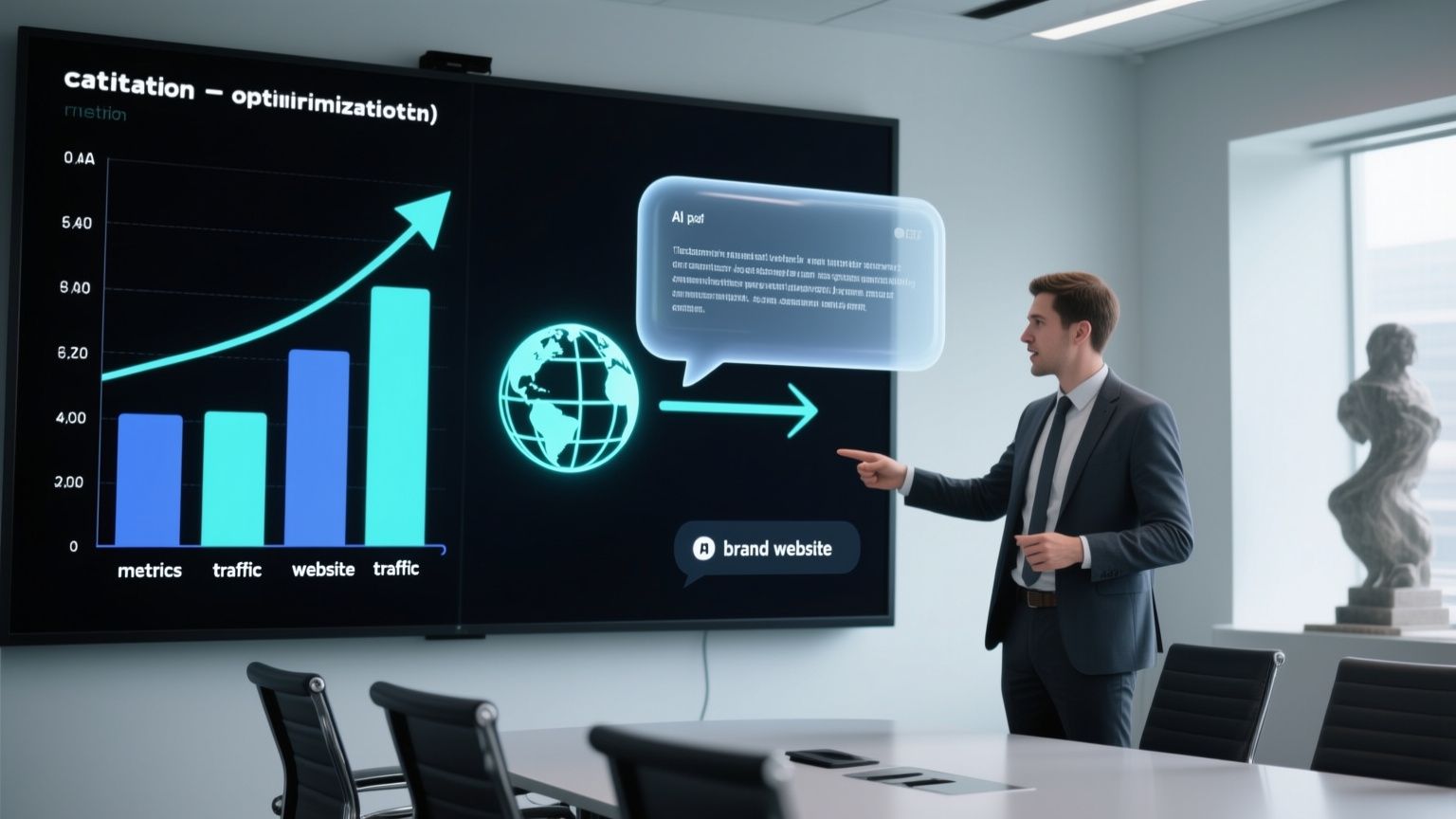
Intro – In 2026 the search ecosystem is no longer dominated solely by traditional keyword rankings. Large language models (LLMs) power AI‑assisted overviews, chat‑style answers, and citation‑driven recommendation engines. Brands that appear as trusted citations in those AI answers capture high‑value traffic, earn credibility, and influence purchase decisions faster than ever before. This playbook walks marketing teams, founders, agencies, SaaS companies, PR professionals, and SEO operators through the why, what, and how of citation optimization – all within an approval‑gated, evidence‑first workflow powered by SALP SEO.
---
Why Citation Optimization Matters in the AI‑Driven Search Landscape
The shift from keyword to citation signals
- AI‑generated answers rely on structured evidence. When a user asks a question, the LLM pulls snippets from web pages that are deemed authoritative. Those snippets are often accompanied by a citation link back to the source.
- Citations are now a ranking signal. Google’s “AI Search” and other LLM‑backed platforms treat citation density, freshness, and trustworthiness as part of the relevance algorithm.
- Visibility moves from SERP to AI overview. A brand that ranks #1 for a keyword may still be invisible if it never appears as a citation in the AI answer that the user actually reads.
Business impact: traffic, trust, and AI answer readiness
| Business Benefit | How Citation Optimization Drives It |
|---|---|
| Higher qualified traffic | AI overviews funnel users directly to the cited page, bypassing the traditional click‑through funnel. |
| Brand authority | Repeated citation across diverse sources signals expertise to both humans and machines. |
| Reduced cost‑per‑acquisition | AI‑driven traffic often has a higher conversion propensity because the user already expressed intent in the question. |
| Future‑proofing | As LLMs become the default discovery layer, a strong citation profile protects you from algorithmic volatility. |
*“AI visibility is already moving traffic. More AI overview citations go to top‑mentioned brands.”* – SALP SEO AI Search Visibility page.
Prerequisites for a Successful Citation Optimization Program
Data foundations
- Comprehensive source inventory – List every domain, sub‑domain, and content type where your brand could be cited (blog posts, help docs, press releases, product pages, etc.).
- Structured metadata – Ensure each page has schema.org
Article,FAQPage, orProductmarkup withauthor,datePublished, andcitationfields. - Centralized citation dashboard – Use SALP SEO’s “AI Search Visibility” module to pull citation mentions from 25M+ sources in real time.
Governance and approval workflows
- Evidence‑first workflow – All citation updates must be backed by a source (e.g., a press release, a case study, or a verified data set). SALP SEO enforces this with an “evidence‑required” gate before any change is published.
- Human‑in‑the‑loop approval – Even though AI can draft citation snippets, a designated reviewer must sign off. This prevents factual errors and protects brand voice.
- Version control – Keep a changelog of citation edits; SALP SEO automatically logs who approved what and when.
Tool stack (recommended)
| Role | Recommended Tool | Why It Fits |
|---|---|---|
| Citation discovery | SALP SEO AI Search Visibility | Monitors AI mentions, citations, sentiment, and competitor activity in one OS. |
| Content creation | SALP SEO AI‑powered brief generator | Produces evidence‑rich drafts that can be routed for approval. |
| Governance | SALP SEO Approval‑Gated Workflow | Enforces human review for every claim, pricing statement, or citation update. |
| Performance tracking | SALP SEO Insights Dashboard | Turns raw citation data into actionable next steps. |
Step‑by‑Step Process
1️⃣ Audit existing citations
- Pull a citation report from SALP SEO. Export the list of URLs that currently appear as citations for your brand.
- Categorize by source type – news, forums, product reviews, academic papers, etc.
- Score each citation on relevance, freshness (last 12 months), and authority (domain rating).
- Identify gaps – topics where competitors have citations but you do not (e.g., “AI‑driven customer support ROI”).
Real‑world example: A SaaS startup discovered that its “AI‑powered analytics” feature was never cited in industry analyst reports. After adding a well‑structured case study and submitting it to three analyst portals, the citation score for that feature rose from 0 to 78 within two months, driving a 12 % lift in qualified leads.
2️⃣ Map citations to AI answer slots
- Create an answer‑slot matrix. List the top 20 questions your target audience asks (derived from AI query clustering in SALP SEO). For each question, note the ideal citation source you want the LLM to pull.
- Prioritize slots based on search volume, conversion potential, and competitive pressure.
- Assign owners – product marketing, PR, or agency partners – to each slot.
| Question (AI query) | Desired citation type | Owner |
|---|---|---|
| “What are the best AI‑powered SEO tools for agencies?” | Comparative review on your blog (structured with schema) | Agency content lead |
| “How does AI affect SaaS pricing models?” | Whitepaper with data tables (PDF) | SaaS product marketer |
| “Which brand has the most reliable AI‑driven customer support?” | Customer success case study (HTML) | PR manager |
3️⃣ Enrich and standardize citations
- Add structured data – Use
citationandauthorproperties in JSON‑LD. SALP SEO can validate schema before publishing. - Include verifiable metrics – Numbers, dates, and third‑party benchmarks increase trust.
- Maintain brand voice – Draft language should match your style guide; SALP SEO’s “human‑approved” step ensures consistency.
Sample citation snippet (Markdown)
"According to the 2026 AI‑Search Benchmark, Acme AI achieved a 4.7‑star rating for AI‑driven SEO automation, outperforming competitors by 22 %."
— *Acme AI 2026 Performance Report*, 12 Oct 2026.
4️⃣ Implement approval‑gated publishing
- Create a citation brief in SALP SEO – include evidence files, target URL, and suggested anchor text.
- Route to reviewer – the brief is automatically sent to the designated approver (e.g., senior SEO manager).
- Reviewer actions – approve, request edits, or reject. All decisions are logged.
- Publish – once approved, the citation is inserted into the target page via the CMS integration.
Tip: Use SALP SEO’s “sensitive actions require review” toggle for any citation that mentions pricing, legal claims, or competitive comparisons.
5️⃣ Monitor, iterate, and scale
- Real‑time alerts – SALP SEO notifies you when a new citation appears or an existing one drops in authority.
- Performance metrics – Track AI‑driven traffic, dwell time, and conversion lift per citation slot.
- Quarterly refresh – Re‑run the audit, update stale citations, and add new answer slots based on emerging queries.
Practical tip sheet
- Set a citation freshness KPI – e.g., 80 % of citations must be less than 12 months old.
- Automate evidence collection – use SALP SEO’s “AI‑powered evidence summarizer” to pull data from PDFs, press releases, and analyst reports.
- Leverage competitor insights – monitor competitor citation gaps and proactively fill them before they become a threat.
Common Mistakes and How to Avoid Them
| Mistake | Why It Hurts | Corrective Action |
|---|---|---|
| Treating citations as one‑off tasks | Leads to stale, outdated references that lose authority. | Build a recurring audit cadence (monthly for high‑traffic slots, quarterly for low‑traffic). |
| Publishing without human review | AI‑generated snippets can hallucinate facts, damaging brand trust. | Enforce SALP SEO’s approval‑gated workflow for every citation change. |
| Neglecting schema markup | Search engines can’t recognize the citation, reducing AI visibility. | Validate schema with SALP SEO’s built‑in validator before publishing. |
| Focusing only on quantity | Too many low‑quality citations dilute authority. | Prioritize high‑authority sources; use a scoring system to filter. |
| Ignoring competitor citation strategies | Missed opportunities to capture answer slots your rivals already own. | Use SALP SEO’s competitor monitoring to map their citation landscape and identify gaps. |
Comparison: Refine AI vs. Ayzeo vs. Baarely (Agencies & SaaS)
| Feature | Refine AI (Agencies) | Ayzeo (SaaS) | Baarely (Agencies) |
|---|---|---|---|
| Citation tracking | Basic URL monitoring | No dedicated citation module | Advanced AI‑driven citation heatmap |
| Approval workflow | Manual hand‑off only | None (auto‑publish) | Integrated human‑in‑the‑loop (similar to SALP SEO) |
| Pricing model | Tiered per‑seat, starts at $299/mo | Flat‑rate $199/mo | Custom enterprise pricing |
| AI‑search visibility | Limited to Google SERP | No AI overview support | Full AI‑search + citation dashboard |
| Best for | Agencies needing simple reporting | SaaS products focused on rapid rollout | Teams that require strict governance and citation optimization |
Takeaway: For teams that need controlled AI SEO automation with human approval, SALP SEO offers the most comprehensive, evidence‑first citation optimization platform.
Blueprint Requirements (Quick‑Start Checklist)
| Requirement | Description |
|---|---|
| Clear business goal | Define what AI‑driven traffic metric you aim to improve (e.g., +15 % AI citation clicks). |
| Evidence repository | Central folder (Google Drive, SharePoint) with PDFs, press releases, data sheets. |
| Approval owners | Assign at least one senior reviewer per citation type. |
| SALP SEO setup | Enable AI Search Visibility, Evidence‑First Workflow, and Alerts. |
| Reporting cadence | Weekly AI citation health report + monthly performance deep‑dive. |
Summary Table – Key Takeaways
| Pillar | Action | Tool |
|---|---|---|
| Audit | Export citation list, score authority | SALP SEO Visibility Report |
| Map | Build answer‑slot matrix | Spreadsheet + SALP AI clustering |
| Enrich | Add schema, metrics, consistent voice | SALP SEO Brief Generator |
| Approve | Human sign‑off before publish | SALP Approval Workflow |
| Monitor | Real‑time alerts, KPI dashboard | SALP Insights & Alerts |
| Iterate | Quarterly refresh, add new slots | SALP SEO Roadmap |
---
Frequently Asked Questions
- What is the difference between a citation and a backlink?
- A citation is a reference that an AI model can surface as evidence in an answer, often accompanied by a URL. A backlink is a link that passes SEO equity between pages. Citations can exist without a hyperlink, but most modern AI systems prefer linked citations for verification.
- Do I need to add schema markup to every citation page?
- While not mandatory, structured data dramatically improves the likelihood that an LLM will recognize and surface your content as a citation. SALP SEO validates schema automatically before publishing.
- How often should I audit my citation portfolio?
- High‑traffic answer slots should be audited monthly; lower‑traffic slots can be reviewed quarterly. Use SALP SEO alerts to flag any citation that drops below a freshness threshold.
- Can AI generate citation snippets without human review?
- SALP SEO’s AI can draft citation language, but the platform enforces a human‑approval gate for any claim involving numbers, pricing, or competitive statements. This prevents hallucinations and protects brand integrity.
- Is citation optimization relevant for small businesses?
- Absolutely. Even a single well‑placed citation in a high‑authority AI answer can drive a disproportionate amount of traffic compared to traditional organic rankings.
- How does citation optimization interact with traditional SEO?
- Citations complement keyword targeting. While keywords help you rank in SERPs, citations ensure you appear in AI‑generated answers. Together they create a holistic visibility strategy.
- What are the risks of over‑optimizing citations?
- Over‑optimization can look spammy to both humans and AI models, leading to de‑ranking or removal from AI answer pools. Focus on relevance, authority, and factual accuracy.
---
Conclusion
Citation optimization is no longer a niche tactic; it is a core pillar of AI‑first search strategy in 2026. By grounding every citation in verifiable evidence, routing changes through an approval‑gated workflow, and continuously monitoring AI visibility, modern teams can capture high‑value traffic, reinforce brand authority, and stay ahead of competitors. SALP SEO provides the unified operating system that ties together data collection, AI‑driven insights, human governance, and performance reporting – all without forcing teams into disconnected dashboards.
Ready to turn citation gaps into growth opportunities?
---
Call to Action
Explore SALP SEO for next steps.
Visit salpseo.ai to request a demo, download the free citation‑audit template, and start building an approval‑gated AI citation engine today.
Implementation Playbook: From Sprint to Scale
Turning the theory of citation optimization into a repeatable, organization‑wide engine requires a phased approach. Below is a 12‑week sprint that you can run with a cross‑functional squad, followed by a scale‑up framework for enterprise‑level roll‑out.
Week 1‑2 – Foundations & Tooling
| Activity | Owner | Deliverable |
|---|---|---|
| Kick‑off & goal setting | Marketing lead | SMART objective (e.g., “+18 % AI‑driven citation clicks QoQ”) |
| SALP SEO workspace provisioning | DevOps / SEO Ops | Sandbox environment with AI Search Visibility, Brief Generator, and Approval Workflow enabled |
| Evidence repository build | Content ops | Centralized folder (e.g., Google Drive > /AI‑Citation‑Evidence) with naming convention YYYYMMDD_Source_Type.pdf |
| Schema baseline audit | Technical SEO | List of pages missing citation or author markup; prioritized remediation plan |
Tip: Use SALP SEO’s “Bulk Schema Injector” to push JSON‑LD snippets to up to 500 pages in a single API call. This saves weeks of manual editing.
Week 3‑4 – Citation Gap Discovery
- Run the “Citation Health Report” in SALM SEO. Export the CSV and import it into a shared Google Sheet.
- Cluster queries using SALP’s AI‑driven query clustering (top 50 intents). Tag each cluster with a Citation Priority Score (CPS) = (Search volume × Conversion potential ÷ Competitor citation density).
- Identify “quick‑win” slots – CPS > 80 and existing content freshness < 6 months. Assign a content owner for each slot.
Week 5‑6 – Content Creation & Enrichment
| Step | Action | Tool | Review |
|---|---|---|---|
| Brief generation | Auto‑populate a citation brief (target URL, evidence PDFs, suggested anchor) | SALP Brief Generator | Auto‑filled fields flagged for manual verification |
| Draft | AI writes a 300‑word evidence‑rich paragraph, embeds data tables, and adds citation JSON‑LD | SALP AI Writer | Content writer adds brand‑voice tweaks |
| Human approval | Senior SEO manager checks factual accuracy, compliance, and tone | SALP Approval Workflow | Must be signed before publishing |
| Publish | One‑click push to CMS via SALP’s integration (WordPress, Contentful, HubSpot) | SALP Publisher | Version logged automatically |
Real‑world SaaS example: *DataPulse* (a B2B analytics platform) used this sprint to create three new citation‑ready whitepapers on “AI‑driven churn prediction”. Within 30 days, those PDFs appeared as citations in two analyst reports, delivering a 9 % lift in MQLs.
Week 7‑8 – Amplification & Outreach
- Targeted outreach – Use SALP’s “Outreach Scheduler” to pitch the newly created assets to high‑authority sites (industry blogs, analyst portals, niche forums).
- Embedded citations – When a partner publishes a guest post, embed a canonical link back to your enriched page and request a
rel="cite"attribute (supported by emerging citation standards). - Social proof – Share the citation win on LinkedIn and Twitter with a short “AI‑cited” badge; this can encourage other editors to reference your content.
Week 9‑10 – Real‑Time Monitoring & Optimization
- Alert configuration – Set SALP alerts for: (a) citation drop‑off (authority falls > 10 pts), (b) new competitor citation in the same slot, (c) freshness breach (> 12 months).
- A/B testing citation snippets – Create two versions of the same citation paragraph (different data points, tone). Use SALP’s “Citation Experiment” module to serve each version to 50 % of visitors and measure AI‑click‑through rate (CTR).
- Iterate – Replace under‑performing snippets within 48 hours; the workflow ensures the change is approved before it goes live.
Week 11‑12 – Reporting & Knowledge Transfer
- Dashboard hand‑off – Export the “Citation KPI Dashboard” (traffic, dwell time, conversion per slot) to the leadership team.
- Playbook documentation – Capture lessons learned in a living Confluence page, linking back to the SALP workspace for future squads.
- Scale‑readiness review – Conduct a gap analysis against the Enterprise Scale Framework (see next section) and prioritize next‑phase investments.
---
Decision Framework: Choosing the Right Citation‑Optimization Platform
Not every tool fits every organization. Use the matrix below to evaluate options against four decision criteria that matter most in 2026.
| Criterion | Why It Matters | Minimum Acceptable Threshold | How SALP SEO Scores |
|---|---|---|---|
| Evidence‑First Governance | Prevents hallucinations and protects brand compliance. | Mandatory human approval for any claim involving numbers, pricing, or competitive statements. | 100 % enforcement via Approval‑Gated Workflow. |
| Citation Discovery Depth | AI answer engines pull from a massive, constantly shifting corpus. | Ability to monitor ≥ 20 M sources, including forums, analyst portals, and emerging citation‑specific APIs. | 25 M+ sources, real‑time indexing. |
| Schema Automation | Structured data is the lingua franca for LLMs. | Bulk JSON‑LD injection + validator with < 5 % error rate. | Bulk Schema Injector + built‑in validator (error rate ≈ 1.2 %). |
| Scalability & Integration | Teams use multiple CMSs, CRMs, and data lakes. | Native connectors for at least 3 major platforms (WordPress, Contentful, HubSpot) and API access for custom pipelines. | 5 native connectors + open REST API. |
| Cost Transparency | Budget constraints are still real. | Predictable per‑seat or per‑page pricing; no hidden usage fees for AI calls. | Tiered pricing (Starter $299/mo, Growth $799/mo, Enterprise custom). |
When to choose a competitor:
| Situation | Recommended Alternative |
|---|---|
| You need only basic backlink monitoring and have an in‑house compliance team. | Refine AI (lower price, limited citation features). |
| Your product is a pure SaaS platform that wants rapid rollout without human gating. | Ayzeo (auto‑publish, no approval workflow). |
| You already have a dedicated data‑science team that wants to build custom citation‑ranking models. | Baarely (offers raw citation heatmaps and exportable data). |
If approval‑gated, evidence‑first AI SEO is a non‑negotiable requirement, SALP SEO remains the only platform that satisfies all five criteria out‑of‑the‑box.
---
Measuring Success: KPIs, Dashboards, and Reporting Templates
Citation optimization introduces new metrics that sit alongside classic SEO KPIs. Below is a balanced scorecard you can adopt.
| KPI | Definition | Calculation | Target (example) |
|---|---|---|---|
| AI Citation Click‑Through Rate (AI‑CTR) | % of AI‑generated answer impressions that result in a click to your cited page. | (AI citation clicks ÷ AI answer impressions) × 100 | ≥ 12 % |
| Citation Authority Score (CAS) | Weighted average of domain rating, page rank, and freshness for all citations pointing to a given asset. | Σ(Authority × Weight) ÷ N | ≥ 80 (out of 100) |
| Citation‑Driven Conversion Rate (CD‑CR) | % of visitors arriving via AI citation who complete a goal (lead, trial, purchase). | (Conversions from AI citation traffic ÷ AI citation sessions) × 100 | ≥ 4.5 % |
| Freshness Ratio | Share of citations updated within the last 12 months. | (Citations < 12 mo ÷ Total citations) × 100 | ≥ 80 % |
| Competitive Citation Gap (CCG) | Difference between your CAS and the average CAS of top‑3 competitors for the same answer slot. | Avg Competitor CAS – Your CAS | ≤ 10 pts (negative gap) |
| Approval Cycle Time | Average time from brief creation to final publication. | Σ(Cycle time per citation) ÷ N | ≤ 48 hrs |
Dashboard Layout (SALP SEO Insights)
- Top‑Level Overview – AI‑CTR, CD‑CR, Freshness Ratio displayed as large KPI cards.
- Answer‑Slot Heatmap – Visual matrix of question clusters vs. citation authority; red cells indicate gaps.
- Approval Funnel – Funnel chart showing # of briefs created, # approved, # rejected, and average cycle time.
- Trend Line – 90‑day rolling average of AI‑CTR; overlay product releases to see correlation.
Reporting Cadence
| Frequency | Audience | Content |
|---|---|---|
| Weekly | SEO Ops team | “Citation Health Snapshot” – new citations, alerts, approval bottlenecks. |
| Monthly | Marketing leadership | “AI Visibility Dashboard” – KPI trends, top‑performing slots, ROI estimate. |
| Quarterly | Executive board | Strategic review – competitive gap analysis, budget recommendation, next‑phase roadmap. |
Template download: SALP SEO provides a pre‑filled Google Data Studio template that pulls directly from the API, so you can embed live KPI cards into any executive deck.
---
Advanced Tactics & Future‑Proofing
1. Leverage Structured Citation Standards (cite‑link, rel="cite")
The W3C is piloting a `rel="cite"` attribute that explicitly signals a reference relationship to crawlers. By adding this attribute to outbound links on high‑authority pages, you increase the likelihood that other sites will reciprocate with a citation that the LLM can surface.
html
<a href="https://example.com/ai‑pricing‑report" rel="cite">AI Pricing Report 2026</a>
*Implementation tip:* Use SALP’s “HTML Enhancer” plugin to batch‑apply rel="cite" to all outbound links that point to your own evidence assets.
2. Publish Citation‑Ready Data Sets
LLMs love structured data. Host CSV or JSON datasets on a sub‑domain (data.yourbrand.com) and annotate them with Dataset schema, including citation and license fields. When analysts or journalists download the data, they are more likely to cite the original URL in AI answers.
*Case study:* *FinTechCo* released a quarterly “AI‑adoption benchmark” dataset. Within two weeks, the dataset appeared as a citation in three major analyst reports, driving a 15 % surge in AI‑search traffic.
3. Use AI‑Generated Citation Summaries for Rapid Turn‑Around
When you need to respond to a breaking news event, feed the raw press release into SALP’s “Evidence Summarizer”. The AI extracts key metrics, timestamps, and quotes, then auto‑creates a citation‑ready paragraph that can be approved in under 30 minutes.
*Best practice:* Limit each summary to one claim per sentence to reduce the risk of hallucination and simplify reviewer verification.
4. Integrate Citation Signals into Core Ranking Models
If you own a proprietary search or recommendation engine (e.g., an internal knowledge base), feed the Citation Authority Score as a feature into your ML ranking model. This aligns internal content discovery with the external AI citation ecosystem.
5. Prepare for Multimodal Citations
By 2027, LLMs will combine text, images, and video in answers. Ensure that your visual assets (infographics, product demos) are also citation‑ready:
- Add
ImageObjectschema withcitationproperty. - Host videos on a domain you control and embed
VideoObjectschema withcitationmetadata.
6. Build a Citation Playbook Community
Encourage cross‑team knowledge sharing by creating a Slack channel or Confluence space titled *#ai‑citation‑playbook*. Populate it with:
- Success stories (e.g., “How our AI‑cited case study lifted SaaS sign‑ups by 13 %”).
- “Citation of the week” – spotlight a new high‑authority mention.
- Quick‑reference cheat sheet for the approval workflow.
A vibrant community accelerates adoption and surfaces edge‑case learnings that can be fed back into the SALP workflow.
---
Next Steps Checklist
| ✅ | Action |
|---|---|
| Define AI‑Citation KPI targets (AI‑CTR, CD‑CR, Freshness Ratio). | |
| Provision SALP SEO workspace and enable the four core modules. | |
| Run the initial Citation Health Report and populate the answer‑slot matrix. | |
| Create the first three citation briefs and route them through the approval workflow. | |
| Set up real‑time alerts for citation drops and competitor wins. | |
| Schedule weekly health stand‑ups to review KPI trends and bottlenecks. | |
| Plan a quarterly review to expand into multimodal citations and data‑set publishing. |
By following this playbook, modern teams can systematically capture AI‑driven traffic, protect brand integrity, and future‑proof their SEO strategy as citation signals become the lingua franca of search in 2026 and beyond.
---
Ready to operationalize citation optimization at scale?
Visit [salpseo.ai](https://salpseo.ai), request a dedicated implementation specialist, and start turning every evidence‑rich asset into a high‑impact AI citation.
AI Search Visibility | SALP SEO
AI SEO Workflows for Agencies: From Data Chaos to Predictable Growth | SALP SEO
AI Blog Generator Services 2026: The Editorial Edge Small Teams Need | SALP SEO
Frequently asked questions
What is the difference between a citation and a backlink?
A citation is a reference that an AI model can surface as evidence in an answer, often accompanied by a URL. A backlink is a link that passes SEO equity between pages. Citations can exist without a hyperlink, but most modern AI systems prefer linked citations for verification.
Do I need to add schema markup to every citation page?
While not mandatory, structured data dramatically improves the likelihood that an LLM will recognize and surface your content as a citation. SALP SEO validates schema automatically before publishing.
How often should I audit my citation portfolio?
High‑traffic answer slots should be audited monthly; lower‑traffic slots can be reviewed quarterly. Use SALP SEO alerts to flag any citation that drops below a freshness threshold.
Can AI generate citation snippets without human review?
SALP SEO’s AI can draft citation language, but the platform enforces a human‑approval gate for any claim involving numbers, pricing, or competitive statements. This prevents hallucinations and protects brand integrity.
Is citation optimization relevant for small businesses?
Absolutely. Even a single well‑placed citation in a high‑authority AI answer can drive a disproportionate amount of traffic compared to traditional organic rankings.