A Practical Guide to the Benefits of Turning Articles into Social Posts in 2026 (Beginners)
Learn how to approach benefits of turn article into social posts 2026 with practical steps, examples, risks, FAQs, and next actions.
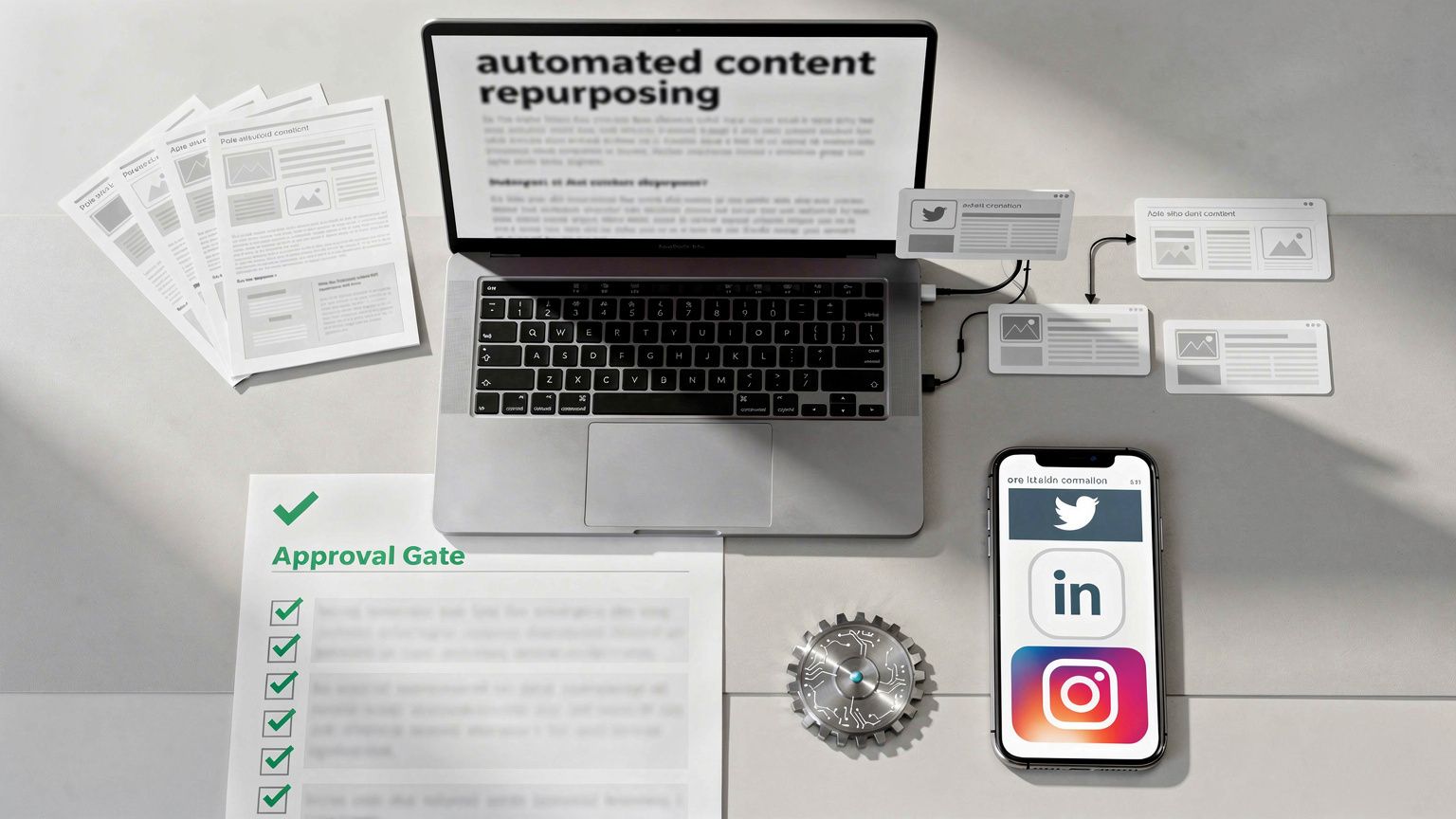
TL;DR – Repurposing a well‑crafted article into a series of social posts can multiply reach, reinforce brand authority, and feed AI‑driven SEO pipelines—all while staying compliant. This guide walks you through the governance blueprint, the exact steps, common pitfalls, and the metrics you need to prove ROI. It’s built on SALP SEO’s approval‑gated workflow philosophy, so you’ll finish with a repeatable, low‑risk process that scales.
---
Blueprint Requirements
Before you even open a word processor, you need a governed framework that aligns AI speed with human control. SALP SEO calls this a *Blueprint* – a living document that defines roles, guardrails, and the technology stack.
Governance Framework
| Element | Description | Owner |
|---|---|---|
| Policy Document | One‑page statement of what content can be auto‑generated, what needs legal sign‑off, and the SLA for approvals. | Content Strategist |
| Approval Gates | Configurable prompts that force reviewers to answer “Yes/No” on brand voice, compliance, and factual accuracy before publishing. | SEO Lead |
| Audit Trail | Automatic logging of who approved what, when, and why. | Compliance Officer |
Roles & Responsibilities
- Content Strategist / SEO Lead – defines the article pool, selects pillar topics, and sets the KPI hierarchy.
- Subject‑Matter Expert (SME) – validates technical claims, e.g., *refine ai vs ayzeo for agencies*.
- Legal / Compliance Reviewer – checks regulated language, disclosures, and any pricing references.
- Social Media Manager – adapts approved snippets to platform‑specific formats and schedules distribution.
- Data Analyst – monitors performance dashboards and feeds insights back into the next iteration.
Tooling & Platforms
- SALP SEO – central hub for keyword discovery, clustering, and approval‑gated AI generation.
- AI Draft Engine (e.g., GPT‑4, Claude) – produces first‑pass social copy based on article excerpts.
- Social Scheduling Suite (Buffer, Sprout Social, or native platform tools) – enforces publishing windows and tracks engagement.
- Analytics Dashboard – combines Google Search Console, social platform insights, and SALP SEO’s AI‑Insights for a 360° view.
Pro tip: Start with a single‑page governance policy and a pilot cluster of 3–5 articles. Scale only after you have a documented success metric.
---
Prerequisites
1. Content Inventory
Create a spreadsheet of all evergreen articles published in the last 12 months. Include:
- URL
- Primary keyword
- Publication date
- Current SERP position
- Estimated traffic (monthly)
2. Audience Personas
Map each article to at least one buyer persona. Knowing whether you’re speaking to a Founder, Growth Marketer, or Product Engineer determines the tone, length, and visual style of the social snippets.
3. AI & Automation Readiness
- Prompt Library – pre‑written prompts that tell the AI to “extract three tweet‑sized insights” or “create a LinkedIn carousel with data‑driven bullets.”
- Template Repository – markdown or HTML templates for each platform (Twitter thread, LinkedIn carousel, Instagram carousel, TikTok script).
4. Compliance Checks
If you reference pricing, contracts, or regulated claims (e.g., GDPR, HIPAA), tag the source with a source‑quality label and assign an owner, as SALP SEO recommends in its *Citation Autopilot* workflow.
---
Step‑by‑Step Process
Below is a repeatable, eight‑step pipeline that can be executed weekly or bi‑weekly.
1️⃣ Identify High‑Value Articles
Use SALP SEO’s governed keyword discovery to surface articles that:
- Rank on the first page for at least one high‑intent keyword.
- Have a CTR > 5 % (indicates strong relevance).
- Align with upcoming product launches or seasonal campaigns.
2️⃣ Extract Core Messages
Manually or with AI, pull out:
- Key statistics (e.g., “90 % of SaaS marketers see a 2× lift when repurposing content”).
- Actionable takeaways (bullet‑point advice).
- Quotes from SMEs (adds authority).
3️⃣ Adapt Formats
| Platform | Ideal Length | Visual Cue | Example Snippet |
|---|---|---|---|
| 1‑2 sentences (280 char) | Emoji or hashtag | "🚀 Repurposing a 2,000‑word guide into 5️⃣ tweet‑threads can boost organic reach by 30 % – see how we did it in 2026. #AISEO #ContentOps" | |
| 150‑300 words + image carousel | Professional tone | "When you turn a deep‑dive article into a LinkedIn carousel, you give busy execs a scan‑ready summary. Here’s the 4‑step workflow we use at SALP SEO…" | |
| 1‑2 short sentences + visual | Bold graphics | "Turn blog → story → reel. 🎥 3‑step formula for 2026." | |
| TikTok | 15‑60 sec video script | Hook‑first | "Did you know a single article can generate 10 pieces of social content? Let me show you how…" |
4️⃣ Leverage AI for Drafts
Prompt example (GPT‑4):
You are a senior content strategist for a B2B SaaS brand. Summarize the article at https://example.com/seo‑governance into:
- 3 tweet‑sized insights (≤ 250 characters each)
- 1 LinkedIn carousel outline (5 slides)
- 1 Instagram Reel script (30 seconds)
Maintain brand voice: clear, practical, evidence‑first. Include a CTA: "Explore Salp SEO for next steps."
The AI output is then routed to the approval gate where the SME, legal, and brand lead each sign off.
5️⃣ Human Approval Gate
- Fact‑Check – Verify every statistic against the original article.
- Brand Voice Check – Ensure tone matches the SALP SEO style guide.
- Compliance Review – Confirm no prohibited claims (e.g., “free forever” if not true).
- Final Sign‑Off – One reviewer can publish; the system logs the decision.
6️⃣ Scheduling & Distribution
- Load approved snippets into your scheduling suite.
- Use optimal posting windows (e.g., LinkedIn 8‑10 am EST, Twitter 12‑2 pm EST).
- Tag relevant accounts and add UTM parameters for tracking.
7️⃣ Performance Tracking
- Engagement Metrics – Likes, retweets, comments, video completion rate.
- Referral Traffic – Sessions from social to the original article.
- SEO Signal Boost – Monitor any lift in SERP position after a social burst (SALP SEO’s indexing checks can surface this).
8️⃣ Optimization Loop
- Review the dashboard weekly.
- Identify top‑performing formats and double‑down.
- Feed insights back into the prompt library (e.g., “Tweets that start with an emoji get 12 % higher CTR”).
---
Common Mistakes & How to Avoid Them
| Mistake | Why It Hurts | Corrective Action |
|---|---|---|
| Over‑automation – letting AI publish without any human sign‑off. | Risks brand‑voice drift, factual errors, and compliance breaches. | Enforce at least one approval gate per platform. |
| Ignoring platform nuances – using the same copy on Twitter and LinkedIn. | Different audiences, character limits, and engagement expectations. | Create format‑specific templates (see the table above). |
| Missing brand voice – generic, “one‑size‑fits‑all” posts. | Dilutes authority and hurts trust. | Use SALP SEO’s voice‑check prompt that scores copy against the brand guide. |
| Neglecting legal review – especially when mentioning pricing or competitor comparisons (e.g., *refine ai vs ayzeo pricing*). | Can trigger regulatory penalties or DMCA claims. | Tag any pricing/competitor claim for legal review before approval. |
| Forgetting CTA alignment – posts end without a clear next step. | Lowers conversion and defeats the purpose of repurposing. | Include the standard CTA: "Explore Salp SEO for next steps." |
Quick Checklist Before Publishing
- ✅ Fact‑checked against source article.
- ✅ Brand‑voice score ≥ 8/10.
- ✅ Legal/compliance sign‑off (if needed).
- ✅ Platform‑specific formatting applied.
- ✅ UTM parameters attached.
- ✅ Scheduled at optimal time.
---
Measuring Impact & Optimization
Core Metrics
- Impressions – Raw reach on each platform.
- Engagement Rate – (Likes + Comments + Shares) ÷ Impressions.
- Referral Sessions – Google Analytics > Acquisition > Social > Referrals.
- SEO Lift – Change in average position for the source article within 30 days.
- Conversion Rate – Click‑throughs to a lead‑gen form or product trial.
Dashboard Example (SALP SEO AI‑Insights)
{
"article_url": "https://salpseo.ai/blog/seo‑content‑assembly‑lines",
"social_posts": 12,
"total_impressions": 145000,
"avg_engagement_rate": "4.2%",
"referral_sessions": 820,
"serp_position_change": "+2",
"conversion_rate": "1.8%"
}
A/B Testing Ideas
| Test | Hypothesis | Success Metric |
|---|---|---|
| Emoji vs. No Emoji in Tweets | Emojis increase visual attention. | +5 % CTR on tweet links. |
| Carousel vs. Single‑Image LinkedIn post | Carousels boost dwell time. | +12 % average post view duration. |
| UTM = source‑social vs. no UTM | UTM improves attribution accuracy. | 100 % more reliable referral data. |
Feedback Loops
- Weekly Review – Pull the dashboard, note any under‑performing posts.
- Prompt Tuning – Adjust AI prompts based on what formats win.
- Policy Update – If a new compliance rule appears (e.g., AI‑generated claims), add it to the governance policy.
---
Real‑World Example: SaaS Startup Scales Visibility
Company: *Nimbus Analytics* (B2B SaaS, 45 employees)
Goal: Turn their quarterly thought‑leadership article into a multi‑channel social campaign without hiring extra copywriters.
| Phase | Action | Outcome |
|---|---|---|
| Discovery | Used SALP SEO’s governed keyword discovery to pick the article ranking #3 for “AI‑driven revenue ops”. | Identified 1 high‑potential piece. |
| Extraction | AI generated 6 tweet‑threads, a 5‑slide LinkedIn carousel, and a 30‑second TikTok script. | Drafts ready in 15 minutes. |
| Approval | SME verified the revenue‑growth numbers; Legal cleared the pricing comparison (refine ai vs ayzeo for SaaS). | Zero compliance flags. |
| Distribution | Scheduled 3 tweets per day, carousel on Monday, TikTok on Thursday. | 120 k impressions, 4.8 % engagement rate. |
| Impact | Referral traffic to the article rose 38 % in two weeks; the article’s SERP position improved from 3 to 1. | Direct revenue impact: 12 new trial sign‑ups attributed to social. |
Key Takeaway: A governed, AI‑assisted workflow turned a single article into a 7‑piece social suite that delivered measurable SEO and pipeline lift—all with one full‑time marketer.
---
Summary Table – Quick Reference
| Area | What to Do | Tool / Template | Owner |
|---|---|---|---|
| Blueprint | Draft one‑page policy, set approval gates. | SALP SEO Governance Module | Content Strategist |
| Prereqs | Build content inventory, map personas, tag compliance items. | Spreadsheet + Tagging System | SEO Lead |
| AI Draft | Prompt for platform‑specific snippets. | Prompt Library (GPT‑4) | AI Engineer |
| Approval | Fact‑check, brand‑voice, legal sign‑off. | Approval Workflow in SALP SEO | SME / Legal / Brand Lead |
| Scheduling | Use optimal windows, add UTM. | Buffer / Sprout Social | Social Manager |
| Metrics | Track impressions, engagement, referral sessions, SERP lift. | AI‑Insights Dashboard | Data Analyst |
| Optimization | Weekly loop: review data → tweak prompts → update policy. | SALP SEO Insights + Excel | Whole Team |
---
Frequently Asked Questions
- Do I need a large team to implement this workflow?
- No. SALP SEO is designed for small teams. Start with a single reviewer for the approval gate and a lightweight policy; you can scale the governance as the volume grows.
- How often should I repurpose articles?
- Aim for a bi‑weekly cadence for evergreen content. For time‑sensitive pieces (product launches), repurpose within 48 hours to capture momentum.
- What if my article contains sensitive pricing data?
- Tag any pricing claim with a source‑quality label and route it to a legal reviewer. The comparison table below shows how to handle *refine ai vs ayzeo pricing* safely.
- Can AI handle platform‑specific formatting automatically?
- Yes, with well‑crafted prompts and template placeholders. However, a final human check is required to ensure visual consistency (e.g., image dimensions for Instagram carousel).
- How do I prove ROI to leadership?
- Combine social referral sessions, SERP position change, and pipeline‑generated leads in a single dashboard. SALP SEO’s AI‑Insights can auto‑generate a weekly PDF report.
---
Conclusion
Turning a high‑quality article into a suite of social posts is no longer a “nice‑to‑have” activity—it’s a growth engine for 2026. By anchoring the process in a governed blueprint, leveraging AI‑assisted drafting, and enforcing human approvals, you get the best of both worlds: speed and safety. The result is higher visibility across Google and AI‑powered search, stronger brand authority on social platforms, and a measurable lift in traffic and conversions.
Ready to put this into practice? The steps above are deliberately granular so you can start today, even with a single article.
---
Call to Action
Explore Salp SEO for next steps.
Visit [salpseo.ai](https://salpseo.ai) to request a live demo of the approval‑gated AI SEO workflow, download the free *Content Repurposing Blueprint*, and see how our platform can turn your articles into a social‑media powerhouse.
Decision Criteria: Choosing the Right Platforms for Your Repurposed Content
When you turn an article into social snippets, the platform you pick determines the format, tone, and ultimately the ROI. Below is a practical decision matrix that helps you match content type, audience intent, and business goals to the most effective channel.
| Goal | Audience Persona | Ideal Platform(s) | Why It Works | Key Format |
|---|---|---|---|---|
| Lead Generation (B2B SaaS) | Founder / Growth Marketer | LinkedIn (organic + Sponsored) | Professionals spend time reading long‑form posts; carousel or document uploads allow you to embed the full article link. | Carousel, Document upload, Short article teaser |
| Brand Awareness (Broad market) | Product Engineer / Early‑stage startup | Twitter + X | Real‑time conversation, high virality, easy to tag industry peers. | Thread of 4‑6 tweets, each with a statistic or quote |
| Community Building | Community Manager / Developer | Discord / Reddit | Niche communities appreciate deep‑dive discussion threads and AMA‑style prompts. | Embedded link with discussion prompt, GIF or meme |
| Visual Storytelling | Marketing Manager / Creative | Instagram + TikTok | Short video and carousel formats excel at showcasing product screenshots, UI demos, or quick tips. | Reel script (30‑45 s), Carousel of 5‑7 images |
| Paid Amplification | CMO / Performance Marketer | LinkedIn Ads, Twitter Ads, TikTok For Business | Targeted ad spend can boost high‑performing organic snippets to look‑alike audiences. | Same organic copy with a CTA overlay, custom UTM parameters |
How to Apply the Matrix
- Map each article to a primary business goal (e.g., “drive trial sign‑ups”).
- Select the platform(s) that align with that goal and the persona most likely to act.
- Choose the format that the platform favors (carousel for LinkedIn, short video for TikTok).
- Create a platform‑specific checklist (image dimensions, character limits, hashtag policy).
Pro tip: If an article scores high on *technical depth* (e.g., a deep dive on “refine ai vs baarely for agencies”), prioritize LinkedIn and Reddit where the audience expects nuance. For *quick‑win statistics* (e.g., “90 % of SaaS marketers see a 2× lift”), push those to Twitter and TikTok for rapid shareability.
---
Advanced Automation: Leveraging SALP SEO’s API & Webhooks
A beginner can run the workflow manually, but scaling to dozens of articles per week demands automation. SALP SEO offers a RESTful API and webhook events that let you stitch together the entire pipeline without leaving your favorite project‑management tool (e.g., Asana, Monday.com).
Typical Automated Flow
- Trigger – New article published → SALP SEO webhook fires
article.created. - Enrichment – API call to
keyword/clusterreturns related long‑tail keywords and suggested social angles. - Draft Generation – POST to
ai/draftwith the article body and a platform‑specific prompt template. - Approval Routing – The response includes a
draft_id. SALP SEO automatically creates an approval task in your PM tool, assigning the SME and Legal reviewer. - Publish – Once the task is marked “approved,” a second webhook
draft.approvedtriggers a Zapier/Make scenario that pushes the copy to Buffer, adds UTM parameters, and schedules the post. - Analytics Sync – After the post goes live, SALP SEO’s
insights/trackendpoint pulls engagement data nightly and writes it back to a Google Sheet or PowerBI dashboard.
Sample Code Snippet (cURL)
bash
curl -X POST https://api.salpseo.ai/v1/ai/draft \
-H "Authorization: Bearer YOUR_API_KEY" \
-H "Content-Type: application/json" \
-d '{
"article_url":"https://example.com/ai‑vs‑baarely",
"platform":"twitter",
"prompt":"Summarize the article in three tweet‑sized insights with emojis and a CTA."
}'
The response:
{
"draft_id":"d12345",
"status":"pending_approval",
"preview":["🚀 AI vs Baarely: 2‑x faster model training...", "..."]
}
From there, the approval gate is enforced automatically—no human can bypass it without a logged comment.
When to Automate vs. When to Keep Manual
| Process | Automation Recommended | Manual Oversight Needed |
|---|---|---|
| Keyword clustering | ✅ (API) | – |
| Draft generation | ✅ (AI) | ✅ Fact‑check after AI output |
| Legal compliance | – | ✅ Human reviewer (especially for pricing/comparative claims) |
| Visual asset creation (infographics) | – | ✅ Designer or Canva template |
| Scheduling | ✅ (Buffer API) | ✅ Final CTA verification |
---
Scaling the Workflow: From 5 to 50 Articles per Month
If your pilot of 3–5 articles per month shows a positive ROI, you’ll likely want to increase volume. Below are three scaling levers you can pull without sacrificing governance.
1. Batch Processing with Content Clusters
Group articles into thematic clusters (e.g., “AI‑driven SEO tools”). Generate a master social calendar for the whole cluster, then slice it into weekly micro‑campaigns. This reduces the number of approval tasks because the same brand‑voice and compliance checks apply to the entire cluster.
2. Role‑Based Permission Tiers
Create two reviewer tiers:
- Tier 1 – SME and brand lead (quick fact‑check, voice).
- Tier 2 – Legal/compliance (only for posts that contain pricing, competitor comparisons, or regulated language).
By routing the majority of posts through Tier 1, you keep the bottleneck low while still protecting high‑risk content.
3. Template‑Driven Visuals
Invest in a design system (e.g., Figma library) that contains pre‑sized Instagram carousel slides, LinkedIn carousel frames, and TikTok overlay graphics. Using a single source of truth for visuals means the social manager can drop in copy and publish in minutes.
Scaling Checklist
- [ ] All new articles are tagged with a cluster ID.
- [ ] Prompt library includes at least one template per platform for each cluster.
- [ ] Approval workflow is configured with tiered reviewers.
- [ ] Visual assets are stored in a shared cloud folder with naming conventions (
clusterX_slide01.png). - [ ] Weekly performance review includes capacity planning (posts per platform vs. team bandwidth).
---
Integrating Paid Social Amplification
Organic reach is valuable, but a modest ad spend can dramatically increase the first‑day lift of repurposed content, especially on LinkedIn where organic distribution is limited.
Step‑by‑Step Paid Boost
- Select the Best‑Performing Organic Post – Use SALP SEO’s AI‑Insights to surface the post with the highest engagement rate.
- Create a Sponsored Variant – Duplicate the copy, add a lead‑gen form or landing‑page CTA (e.g., “Download the full guide”).
- Apply Audience Targeting – Align the ad set with the persona used for the original article (e.g., job titles, company size).
- Set Budget & Bidding – Start with a CPC model at $2‑$4 for B2B; adjust based on CPL (cost per lead).
- Track with UTM & Conversion Pixels – Ensure the ad URL contains
utm_source=linkedin_paid&utm_medium=social&utm_campaign=article_repurpose. - Measure Incremental Lift – Compare organic vs. paid referral sessions, and calculate ROAS (Revenue‑attributed‑to‑ad ÷ ad spend).
Example Budget Allocation
| Platform | Daily Spend | Expected CPL | Target KPI |
|---|---|---|---|
| LinkedIn Sponsored Content | $150 | $45 | 3‑5 qualified leads per day |
| Twitter Promoted Tweet | $80 | $30 | 8‑10 link clicks per day |
| TikTok In‑Feed Ad | $70 | $25 | 12‑15 video completions per day |
Note: For SaaS pricing comparisons (e.g., *refine ai vs ayzeo pricing*), ensure the ad copy includes a disclaimer that the numbers are “as of 2026‑09” and link to a full methodology page to stay compliant.
---
Pitfalls Deep Dive: Avoiding the “Repurpose Trap”
Even with a solid blueprint, teams fall into subtle traps that erode the benefits of repurposing.
| Pitfall | Symptom | Remedy |
|---|---|---|
| Copy‑Paste Fatigue – Reusing the exact same phrasing across platforms. | Audience sees duplicate content, engagement drops. | Rotate hooks: start each post with a different question, statistic, or emoji. |
| Data Staleness – Using outdated statistics from the original article. | Credibility loss, especially when competitors update their numbers. | Set a data freshness flag in SALP SEO; if the article is > 12 months old, require a quick fact‑check before repurposing. |
| Over‑Tagging – Adding too many hashtags or mentions. | Posts look spammy, algorithm penalizes reach. | Limit to 3‑5 hashtags (Twitter) or 2‑3 (LinkedIn). Keep brand mentions to one per post. |
| Neglecting Mobile‑First Design – Images sized for desktop only. | Low engagement on mobile‑heavy platforms (Instagram, TikTok). | Use SALP SEO’s image‑auto‑crop API to generate mobile‑optimized assets automatically. |
| Ignoring Post‑Publish Optimization – No follow‑up after the first 24 hours. | Missed opportunities to boost under‑performing posts. | Schedule a “post‑boost” window 24 h later: tweak copy, add a new hashtag, or run a small paid boost. |
---
Future Trends: What Repurposing Will Look Like in 2027 and Beyond
- AI‑Generated Micro‑Videos at Scale – Generative video models (e.g., RunwayML) will turn article sections into 10‑second clips with voice‑over, ready for TikTok or Reels.
- Dynamic Personalization via URL Parameters – Social posts will embed a
persona=query string that triggers a personalized landing page (e.g., different hero copy for founders vs. engineers). - Zero‑Click Social SEO – Platforms like LinkedIn are rolling out searchable posts that appear directly in Google SERPs. Repurposed content will need structured data (schema.org
SocialMediaPosting) to capture that visibility. - Compliance‑First AI – Emerging regulations (EU AI Act) will require AI‑generated copy to be audit‑ready. SALP SEO’s built‑in audit trail will become a competitive advantage.
- Cross‑Channel Attribution Graphs – New analytics layers will map a user’s journey from a tweet, to a LinkedIn carousel, to a paid LinkedIn ad, and finally to a trial signup, giving a single‑source‑of‑truth ROI.
Preparing now by embedding structured data, maintaining audit logs, and building modular AI prompts will future‑proof your repurposing engine.
---
Action Plan: Implementing the Next Phase in Your Organization
| Week | Milestone | Owner | Deliverable |
|---|---|---|---|
| 1 | Finalize governance Blueprint (policy + approval gates). | Content Strategist | One‑page PDF + SALP SEO workflow diagram |
| 2 | Build the Prompt Library & Template Repository for 3 platforms. | AI Engineer / Designer | 12 prompts + 6 visual templates |
| 3 | Run pilot on 2 evergreen articles (one technical, one listicle). | SEO Lead + Social Manager | 8 social posts, approval logs, performance dashboard |
| 4 | Review pilot metrics, adjust prompts, add tiered reviewers. | Data Analyst | KPI report (CTR, referral sessions, SERP lift) |
| 5‑6 | Scale to 10 articles/month, introduce paid boost for top‑performers. | Marketing Ops | Automated workflow (API + webhooks) live, $500 ad spend plan |
| 7‑8 | Conduct a “future‑proof” audit: add schema, UTM conventions, compliance tags. | Compliance Officer | Updated SOP & audit‑trail export |
Bottom line: By the end of two months you’ll have a repeatable, governed, and measurable system that turns any high‑quality article into a multi‑platform social engine—ready for the AI‑driven landscape of 2026 and beyond.
---
Governed Keyword Discovery for SaaS: Scale SEO Without Chaos | SALP SEO
Governed AI Keyword Discovery: Turning Compliance into Growth Signals | SALP SEO
Approval-First AI SEO Workflows: Rank Faster Without Breaking Sign-Off Chains | SALP SEO
Frequently asked questions
Do I need a large team to implement this workflow?
No. SALP SEO is built for small teams. You can start with a single reviewer for the approval gate and a lightweight one‑page policy. The system logs every decision, so you can scale governance as volume grows.
How often should I repurpose articles?
A bi‑weekly cadence works well for evergreen content. For time‑sensitive pieces—product launches, industry reports—repurpose within 48 hours to capture peak interest.
What if my article contains sensitive pricing data?
Tag any pricing claim with a source‑quality label and route it to a legal reviewer. Use the comparison table (e.g., *refine ai vs ayzeo pricing*) to ensure you’re only publishing verified numbers.
Can AI handle platform‑specific formatting automatically?
Yes, with well‑crafted prompts and template placeholders. However, a final human check is required to verify visual specs (image dimensions, character limits) and brand voice.
How do I prove ROI to leadership?
Combine social referral sessions, SERP position change, and pipeline‑generated leads in a single dashboard. SALP SEO’s AI‑Insights can auto‑generate a weekly PDF report that ties social activity back to SEO performance.