SEO article title: Discovering Hidden Internal Linking Wins with Discovery Clustering
Learn how to approach keyword discovery clustering for internal linking with practical steps, examples, risks, FAQs, and next actions. A practical guide to discovery clus
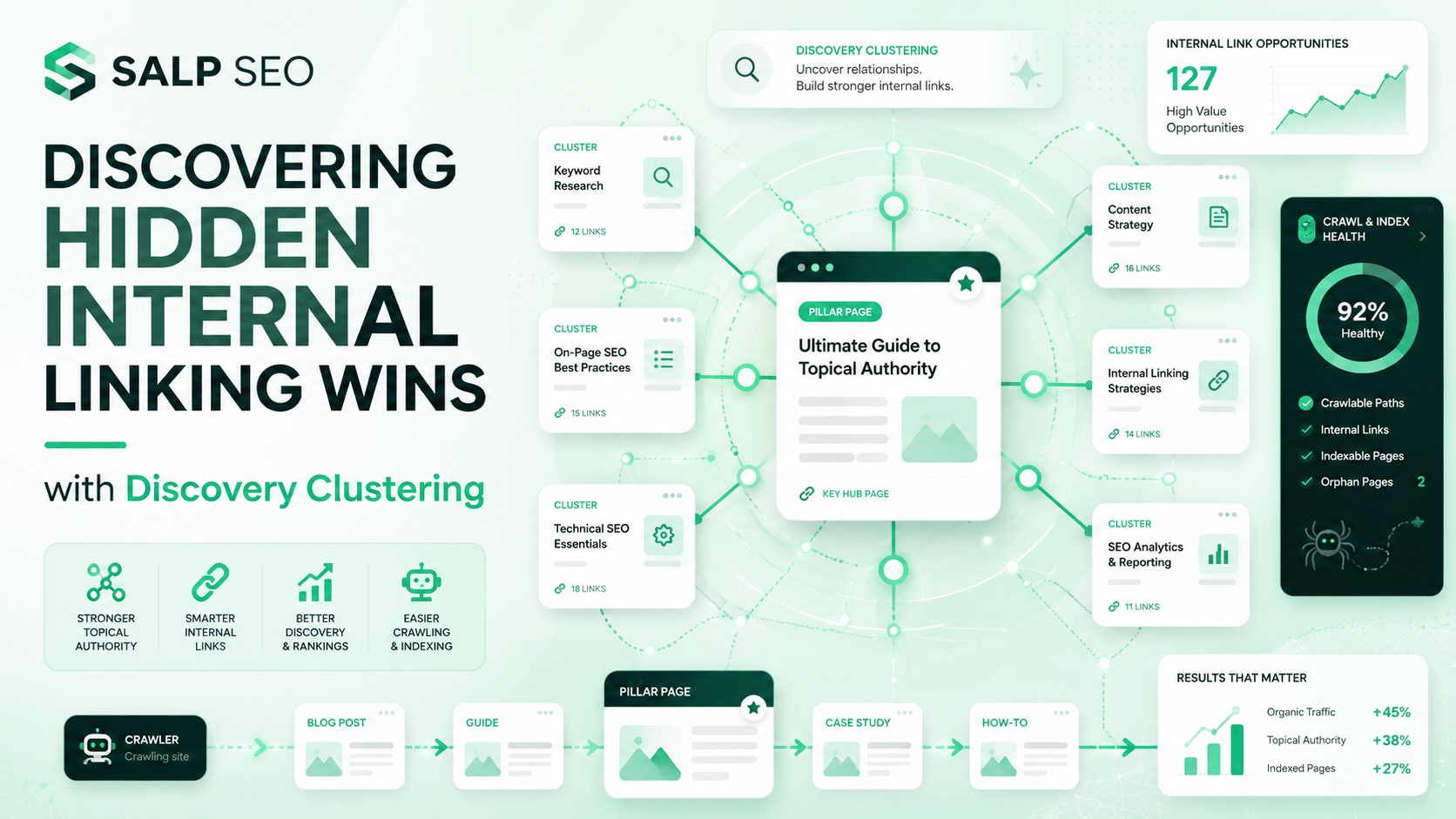
Discovering Hidden Internal Linking Wins with Discovery Clustering
Introduction
Internal linking is one of the most underrated levers for organic visibility. When done thoughtfully, it helps search engines discover new content, distributes page authority, and guides users through a meaningful journey. This article introduces discovery clustering as a practical method to plan and optimize internal links at scale, backed by real-world workflows that balance AI-assisted efficiency with human oversight.
How to keyword discovery clustering for internal linking
Discovery clustering groups related keywords into thematic clusters and aligns them with content silos. This approach makes it easier to map a coherent internal linking structure that reinforces intent signals and improves crawlability. The core idea is to tie each cluster to a set of cornerstone pages and supporting articles, establishing explicit linking pathways that reflect user journeys.
Prerequisites
- A refreshed content inventory with current page themes and performance signals.
- A defined content architecture: pillars/cornerstones, supporting articles, and orphan pages.
- Clear approval policies for AI-assisted content decisions to ensure brand alignment and accuracy.
- A sitemap and internal linking strategy that supports discovery and indexing health.
- Baseline metrics for visibility, engagement, and crawl performance to measure impact.
Step-by-step process
- Inventory and classify content
- Catalog all pages and group them by core topics. Identify gaps where a cluster could consolidate related content.
- Tag pages by intent (informational, transactional, navigational) and by content type (blog, guide, product page).
- Define clusters and cornerstone content
- Create 5–8 clusters around high-priority topics relevant to your audience and business goals.
- For each cluster, designate a cornerstone page that serves as the authoritative hub and multiple supporting pages that link to and from it.
- Map internal linking paths
- Design explicit linking rules: from supporting pages to the cornerstone page, and from the cornerstone to related subpages, with contextual anchor text aligned to user intent.
- Ensure every cluster has at least one index or hub page that aggregates related content.
- Integrate AI-assisted drafting with human gates
- Use AI to draft supporting content guided by cluster prompts, but require human review before publishing to maintain accuracy and brand voice.
- Establish an approval workflow: content strategist (or SEO manager) reviews, with subject-matter experts and legal/compliance as needed.
- Technical hygiene and indexing checks
- Verify canonical tags, URL hygiene, and sitemap accuracy to prevent duplicate content and ensure discoverability.
- Run indexing checks to catch crawl issues early and monitor changes in indexing status over time.
- Publish, monitor, and iterate
- After publishing, track impressions, clicks, CTR, and average position for cluster pages. Use these signals to refine anchors, linking density, and page content.
- Regularly prune broken links, update outdated pages, and expand clusters with new, relevant articles.
Common mistakes
- Forcing links without thematic relevance, which dilutes page authority and hurts user experience.
- Over-optimizing anchor text, risking keyword stuffing and reader fatigue.
- Neglecting orphan pages that aren’t integrated into any cluster.
- Insufficient human oversight in AI-generated content, leading to inaccuracies or misalignment with brand tone.
- Ignoring accessibility and indexability considerations in internal navigation.
Blueprint requirements
- A documented approval policy: every publish requires human sign-off before indexing.
- A lightweight governance model: roles like content strategist, AI content creator, human editor, and publishing approver.
- A project starter kit: goals, audience, and baseline content inventory.
- Clear KPIs: impressions, clicks, CTR, average position, indexing status, and content performance over time.
- A simple, scalable dashboard that tracks cluster health and linking performance.
Real-world examples
- Example A: SaaS onboarding hub
- Cluster: onboarding guides, product tutorials, pricing pages
- Cornerstone: “Complete SaaS onboarding playbook”
- Linking: onboarding guides link to the cornerstone; the cornerstone links to pricing and advanced setup guides; internal links use anchor text like “onboarding best practices” and “SaaS activation checklist.”
- Outcome: improved crawl coverage and a noticeable lift in pages indexed under the onboarding topic.
- Example B: E-commerce category depth
- Cluster: product categories (e.g., running shoes)
- Cornerstone: “Ultimate guide to running shoes”
- Linking: product pages link to the guide and back to category hubs; the guide links to related product pages with intent-aligned anchors.
- Outcome: better topical authority and smoother user journeys across catalog pages.
Comparison: discovery clustering vs traditional siloing
+ Feature | Discovery Clustering | Traditional Siloing
-+--+--+--
- Definition | Grouping by keyword discovery to identify linking opportunities | Static topic-based silos with a fixed structure
- Link strategy | Explicit, evidence-based linking paths grounded in clusters | Top-down silo pages with limited cross-linking
- AI involvement | Guided prompts with human approvals for quality control | Limited or no AI-assisted optimization
- Agility | Easier to adapt clusters as new data arrives | More rigid once established
- Risk | Higher initial setup effort but better long-term scalability | Risk of stale structure and missed opportunities
Practical tips for getting started
- Start small: pilot one cluster with 5–7 pages to validate the workflow before expanding.
- Align anchors with user intent: use natural language anchor text that reflects the page’s value proposition.
- Maintain a content inventory: track changes, improvements, and who approved what.
- Automate where safe: use AI to draft supporting content, but keep publishing gated behind human approval.
- Monitor indexing health: ensure new links are crawlable and that the sitemap reflects the updated structure.
Key takeaways
- Discovery clustering can reveal hidden internal linking opportunities by organizing content around data-backed keyword clusters.
- An approval-gated AI workflow helps maintain accuracy, brand voice, and SEO quality while scaling content production.
- Regular governance, measurement, and iterative improvements are essential to sustaining gains in visibility and crawlability.
FAQ
- What is discovery clustering in internal linking?
Discovery clustering is a method to group related keywords into thematic clusters and map internal linking paths that reinforce user intent and crawlability, with explicit hub pages guiding content discovery.
- Why should I gate AI-generated content with human approvals?
Human approvals ensure accuracy, brand alignment, compliance, and SEO quality, reducing the risk of low-quality or misleading content being indexed.
- How do I measure the impact of discovery clustering?
Track metrics such as impressions, clicks, CTR, average position, and indexing status for cluster pages before and after implementing changes; monitor linking signals like internal link count per page and anchor text diversity.
- What are common mistakes when implementing discovery clustering?
Mistakes include irrelevant linking, over-optimization of anchors, neglecting orphan pages, insufficient human oversight, and ignoring accessibility and indexing concerns.
- How many clusters should I start with?
Begin with 5–8 clusters that align with your top business goals and audience needs, then scale based on governance capacity and observed impact.
Conclusion
Discovery clustering offers a practical pathway to unlock hidden internal linking opportunities while maintaining quality through an approval-driven AI workflow. By starting with a focused pilot, defining clear roles and policies, and continuously monitoring indexing health and user signals, teams can build scalable, trier-friendly link structures that improve crawlability, topical authority, and overall SEO health.
CTA
Explore Salp SEO for next steps in building an approval-gated AI SEO workflow that scales internal linking discovery while preserving brand integrity.
SALP SEO - AI SEO Intelligence Platform
SALP SEO - AI SEO Intelligence Platform
Frequently asked questions
What is discovery clustering in internal linking?
Discovery clustering groups related keywords into thematic clusters to guide internal linking, establishing hub pages and explicit linking paths that reflect user intent and improve crawlability.
Why should content publishing be approval-gated?
Human approvals ensure accuracy, brand voice consistency, and SEO quality, reducing risks of indexing low-quality or non-compliant content.
How do I start a discovery clustering project?
Begin with a content inventory, define 5–8 clusters, designate cornerstone pages, map linking paths, implement an approval workflow, and monitor indexing health and performance.
What metrics matter for internal linking changes?
Impressions, clicks, CTR, average position for cluster pages, plus indexing status, and linking signals such as anchor relevance and link density.
What common mistakes should I avoid?
Irrelevant links, over-optimized anchors, orphan pages, insufficient human oversight, and neglect of accessibility or canonicalization.